
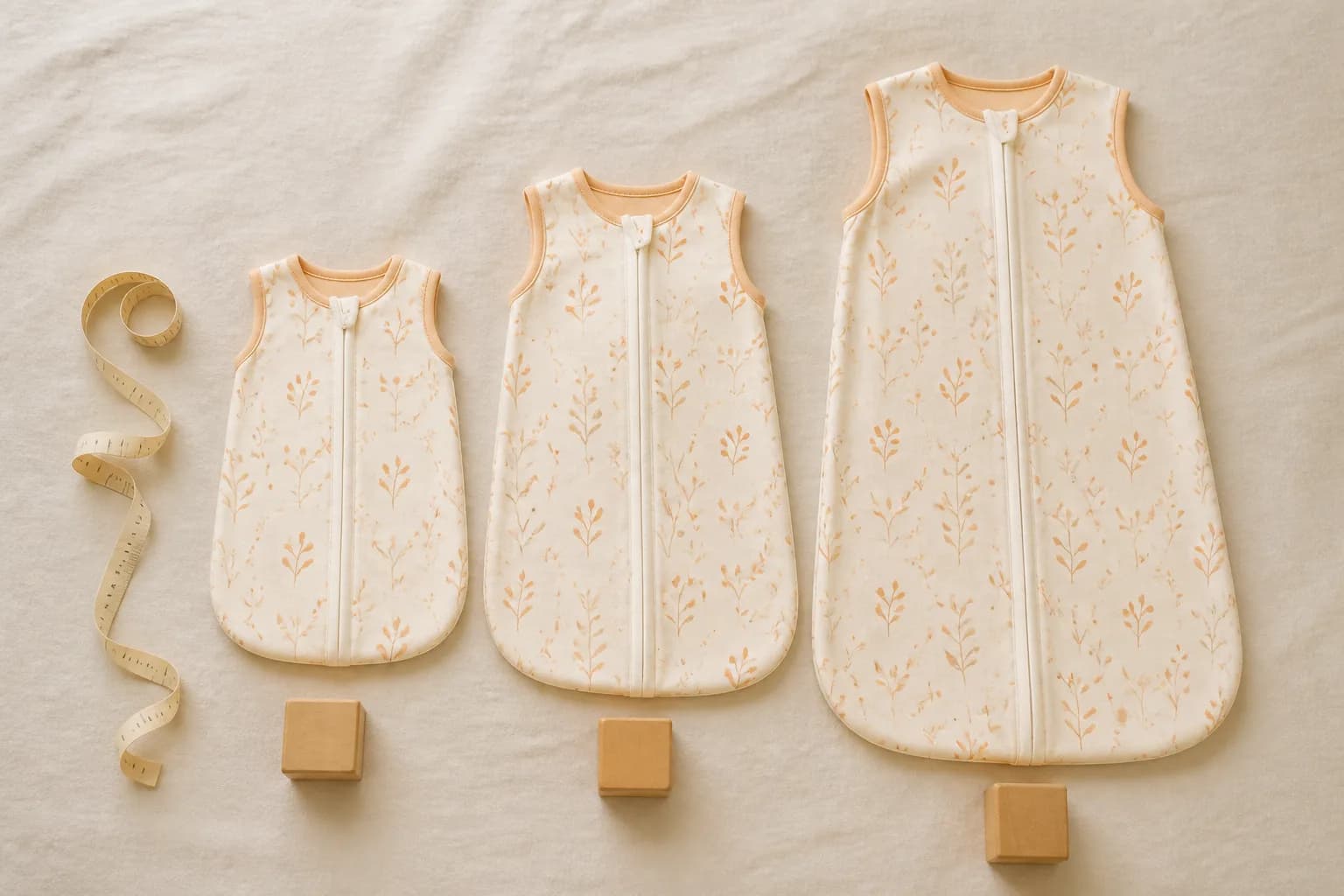
The SNOO sack size label is based on weight, but the right fit also has to pass a simple real-life check: the neckline should stay away from the face, the chest bands should secure without forcing them, and the hips and legs should have room to bend.
SNOO sleep sack size chart
Happiest Baby's published size ranges are:
Swipe across to see every column.
| SNOO sack size | Baby weight | Metric weight |
|---|---|---|
| Small | 5–12 lb | 2–5 kg |
| Medium | 12–18 lb | 5–8 kg |
| Large | 18–26 lb | 8–12 kg |
| Extra Large | 26–33 lb | 12–15 kg |
Source: Happiest Baby's official SNOO Sack sizing guidance. Product availability can differ by country and season.
Important distinction: Sack sizing does not extend the usable life of the bassinet. Happiest Baby's US intended-use information says SNOO is for infants from birth to about 6 months, weighing 5 to 25 pounds, or until they can push up on hands and knees—whichever happens first. Follow the current manual and your pediatrician's guidance.
The fast fit test
Use the weight chart as the starting point, then check these five things after zipping and fastening the sack according to the instructions:
- The neckline stays below the chin. Fabric should not ride toward the mouth or cover the face.
- The sack cannot slide over the shoulders. If the neckline gaps enough to travel upward, the size is too loose or the sack is not secured correctly.
- The chest bands close securely. They should hold the arms and torso as designed without obvious pinching or straining.
- The hips and knees can bend. A snug torso does not mean straight, compressed legs.
- The zipper and seams lie normally. Pulling, gaping, or a zipper that is difficult to close are signs to recheck the size and setup.
If the weight label and the fit test disagree, stop and check the manufacturer's current instructions rather than improvising.
When to move from Small to Medium
The chart boundary is 12 pounds. You do not need to wait for a dramatic growth spurt if the Small is visibly tight at the shoulders, chest, or hips. Likewise, moving to Medium early is not helpful if the neckline becomes loose enough to ride up.
At the boundary:
- Weigh your baby without heavy clothing.
- Try the next size while your baby is awake and supervised.
- Zip and fasten it exactly as directed.
- Check the neckline and shoulder fit before using it for sleep.
- Recheck after washing, especially if the fabric has changed shape.
When to move from Medium to Large
The published boundary is 18 pounds. Many babies are also more active by this stage, so sizing is only one part of the decision. Recheck whether your baby still meets the SNOO's age, weight, and developmental limits and whether it is time to begin the crib transition.
Our when to stop using SNOO guide covers the manufacturer's stopping points, arms-out practice, Weaning Mode, and the move to a bare crib.
Why feet touching the bottom is not the sizing test
Happiest Baby's sizing guidance says feet touching the bottom of the sack is not, by itself, a problem. The design allows the legs to remain bent. Focus on weight, neckline security, chest fit, hip room, and whether the product is being used exactly as directed.
Do not size up solely because a baby's toes reach the end.
SNOO Sack vs Sleepea: do not mix up the two
The SNOO Sack is designed to attach to SNOO's safety clips. Sleepea is a separate swaddle product intended for use outside SNOO. They may look related, but they are not interchangeable inside the bassinet.
For SNOO operation, use the product and attachment method named in the current SNOO instructions. Do not cut slots, alter the sack, use an off-brand attachment workaround, or operate the bassinet without the required clips engaged.
Arms in or arms out?
Newborns commonly begin with arms inside the sack when the product is used as directed. Later, Happiest Baby recommends practicing arms-out sleep before weaning the motion: open the shoulder snaps and bring the arms through the designated armholes, then wait until sleep is going well before switching on Weaning Mode.
That transition is not a race. Try one arm first if the official instructions for your sack allow it, or move to both arms out when your baby is comfortable.
The broader safe-sleep rule matters here: the AAP says to stop ordinary swaddling when a baby shows signs of trying to roll. SNOO has a product-specific clipped sack intended to keep an infant positioned on the back, but the crib transition still requires age-appropriate, unswaddled sleep. Ask your pediatrician when rolling or development makes the plan unclear.
How many SNOO sacks do you need?
For most households, two in the current size is the practical minimum: one in use and one available for spit-up, diaper leaks, or laundry. A third is convenient if you do not wash every day or your baby has frequent blowouts.
Before stocking up:
- Confirm the size with one sack first.
- Check what is included with a purchase or rental.
- Remember that babies can cross a size range quickly.
- Buy only from a source you trust, and inspect used sacks for damaged zippers, stretched necklines, torn seams, or worn attachment wings.
Washing and keeping the fit predictable
Follow the care label on the specific sack. Happiest Baby advises fastening the hook-and-loop bands and leg flap and closing the zipper before washing. This helps reduce snagging and keeps the pieces from attaching to other laundry.
After washing, inspect:
- zipper operation
- seams and arm openings
- attachment wings
- neckline shape
- hook-and-loop closure strength
Retire a sack that no longer fastens or fits as designed.
Safe sleep rules that do not change with sack size
The AAP safe-sleep recommendations call for back sleeping in a separate sleep space with a firm, flat surface and no loose items. The CPSC's “Bare Is Best” guidance says the sleep space should contain only a fitted sheet.
Do not add a loose blanket, pillow, positioner, bumper, or weighted product because the room feels cool or the sack looks roomy. Dress the baby appropriately underneath according to room temperature, the sack's material, and medical guidance.
More SNOO planning help
- Calculate whether renting or buying costs less
- Read our firsthand SNOO review after three months
- Choose compatible SNOO fitted sheets
- Understand SNOO levels and colors
- Know when it is time to stop using SNOO
- Read our honest newborn-stage SNOO experience