parenting

SNOO Weaning Mode: How It Works and When to Start

By
SNOO Weaning Mode: How It Works and When to Start

SNOO Weaning Mode plays the usual sound but removes continuous baseline motion. If the baby cries, SNOO can respond with motion and sound; after calming, it returns to sound without motion.

That makes Weaning Mode a bridge between a moving SNOO and a stationary crib. It is not the first step. Happiest Baby's current guidance puts arms-out sleep first, followed by about one to two weeks in Weaning Mode before the crib move.

Important: Weaning Mode is currently a Premium app feature. App menus and subscription terms can change, so use the live Happiest Baby instructions for your account.

What changes in Weaning Mode?

Normal SNOO operation compared with Weaning Mode

BehaviorNormal baselineWeaning Mode
Sound at the start of sleepOnOn
Motion at the start of sleepGentle baseline motionNo baseline motion
Response to cryingSound and motion can increaseMotion and sound can turn on to respond
After the baby settlesReturns toward moving baselineReturns to sound with no motion
PurposeEveryday responsive soothingPractice sleeping in a still surface before the crib

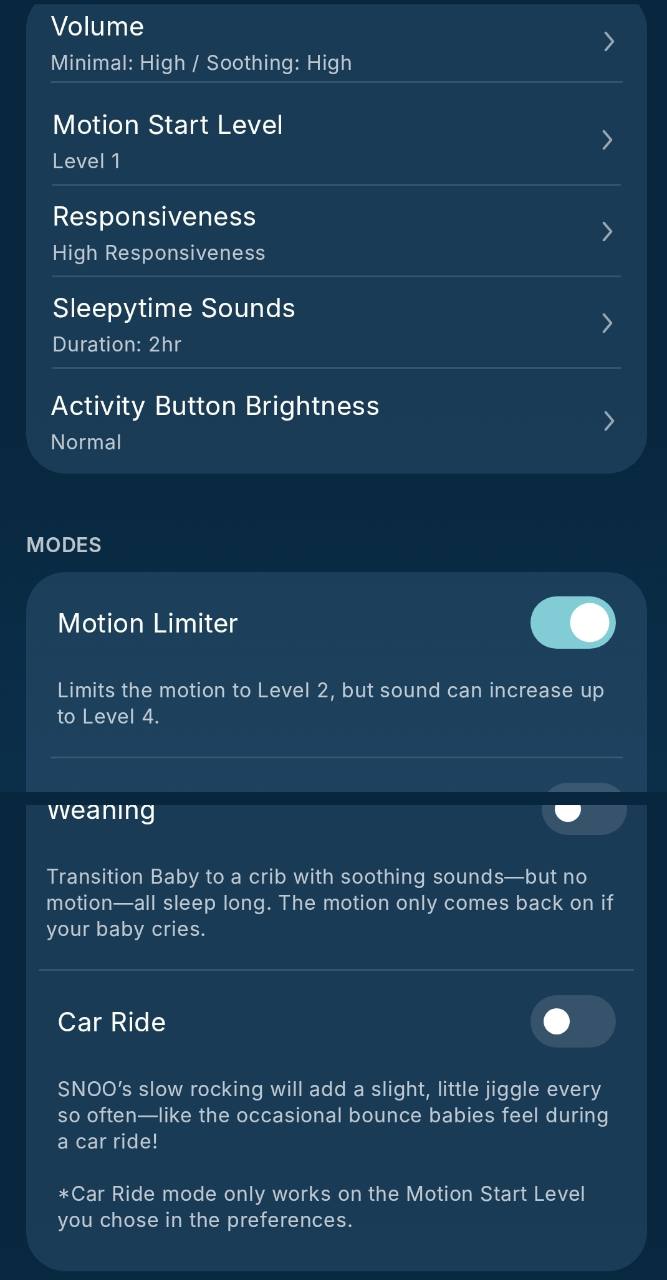
Weaning Mode can only work from the blue baseline. If Motion Start Level has SNOO beginning at a higher setting, Happiest Baby recommends returning it to baseline before beginning the weaning process.

When to start SNOO Weaning Mode

The manufacturer's current transition guidance generally discusses Weaning Mode around 5 to 6 months, after the baby sleeps well with both arms out. The exact calendar is less important than the earliest product limit and the child's readiness.

Start planning when:

  • the baby is approaching the SNOO age, weight or mobility limit;
  • one-arm-out and then two-arms-out sleep are going reasonably well;
  • the crib is assembled with the correct firm mattress and fitted sheet;
  • caregivers have a consistent bedtime routine; and
  • there is enough time to practice before a hard stop.

Do not use Weaning Mode to extend SNOO beyond its instructions. Follow the earliest applicable age, weight, fit or developmental limit in the current manual. Our when-to-stop-using-SNOO guide explains those stopping points.

Step 1: Return to the blue baseline

If you changed Motion Start Level, move SNOO back to its normal blue baseline ahead of the transition. Happiest Baby's current customization guide suggests doing this about two weeks before Weaning Mode when a higher starting level has been in use.

Do not change motion start, responsiveness, volume, arms and the sleep location all on the same night. One change at a time makes the result easier to read.

Step 2: Practice one arm out

Open the designated shoulder snap on one side of the correctly fitting SNOO Sack and bring one arm through. Keep fastening the inner band and sack exactly as the instructions show.

If the baby repeatedly wakes by hitting their face or appears unable to settle, return to the previous approved setup and try again later—unless a product limit or medical instruction requires a faster change.

For fit details, use the SNOO sleep sack size chart.

Step 3: Move to both arms out

After a few successful nights with one arm free, open the other shoulder and practice both arms out. Do not add a loose blanket, positioner, weighted product or improvised swaddle to make the change easier.

The baby should enter the crib transition able to move both arms freely. Outside SNOO, an infant showing signs of rolling should not be swaddled with the arms restrained.

Step 4: Turn on Weaning Mode

In the current Happiest Baby app flow:

  1. Open the baby/SNOO profile.
  2. Choose the connected SNOO device.
  3. Open Modes.
  4. Toggle Weaning on.
  5. Return to the dashboard and look for the W indicator.

Menu wording can change. If the setting is missing, update the app, confirm the correct device/profile and check whether the account currently includes the Premium feature.

Step 5: Give the still baseline time

Happiest Baby's crib-transition guide suggests about one to two weeks with both arms out and Weaning Mode before the crib move.

During that practice window, keep the rest of the routine boring and predictable:

  • same approximate bedtime sequence;
  • same room and lighting;
  • correct sack fit;
  • feeds and diapering based on the baby's needs; and
  • responsive caregiver attention when the baby is not settling.

A few uneven nights do not automatically mean failure. The useful question is whether the baby is increasingly able to begin and return to sleep without continuous motion.

Step 6: Move to the crib

Use a current compliant crib, portable crib or play yard with its approved mattress and a fitted sheet. Place the baby on their back and keep the space bare.

The AAP recommends room sharing without bed sharing, ideally for at least the first six months. Leaving SNOO does not by itself mean the baby must move into a separate room.

Why Weaning Mode may seem not to work

SNOO still moves

Weaning Mode removes baseline motion. Motion can return when the system responds to crying. That is expected behavior.

The W icon is missing

Confirm the correct baby profile and SNOO device, the app version, connection and account feature access. Toggle the mode off and on only after checking the live help page; do not repeatedly change the setup while the baby is in distress.

The baby wakes more often

Check basic needs before blaming the setting: hunger, illness, temperature, diaper, schedule disruption and a poor sack fit. If both-arms-out and no baseline motion began on the same night, step back and separate the changes.

SNOO begins above blue

Motion Start Level may still be raised. Return it to blue before relying on Weaning Mode.

The crib night is much worse than the SNOO night

The room, mattress feel and available space all changed at once. Keep the routine consistent and avoid adding unsafe soft objects. If sleep problems are severe, persistent or accompanied by feeding, breathing or health concerns, call the pediatrician.

A simple transition calendar

This example is flexible and never overrides a product limit:

  • Days 1–4: one arm out;
  • Days 5–8: both arms out;
  • Days 9–15: both arms out plus Weaning Mode;
  • After successful still sleep: move to the bare crib.

Some babies need longer on one step. Others reach a mobility or fit milestone that means the move cannot wait. Safety limits win over a preferred schedule.

Weaning Mode checklist

  • Blue baseline restored.
  • Correct current SNOO Sack size.
  • One arm out practiced.
  • Both arms out practiced.
  • Crib assembled and empty.
  • Premium feature access confirmed.
  • W indicator visible.
  • One to two weeks available before the target move, when limits allow.
  • Pediatrician contacted for individual medical concerns.

Frequently Asked Questions

What does SNOO Weaning Mode do?
It keeps sound running but removes baseline motion. If the baby cries, SNOO can respond with motion and sound, then return to sound without motion after the baby settles.
When should I start SNOO Weaning Mode?
Happiest Baby generally recommends it after the baby sleeps well with both arms out, often around 5 to 6 months, and about one to two weeks before moving to the crib. Product limits can require an earlier transition.
Why is SNOO moving in Weaning Mode?
The mode removes continuous baseline motion; it does not disable responsive motion. SNOO can still move when responding to crying.
Can I use Weaning Mode with a higher starting level?
The manufacturer's current guidance says Weaning Mode works at blue baseline. Return a raised Motion Start Level to blue before beginning.
Is Weaning Mode free?
It is currently listed as a Premium app feature. Access depends on current purchase, rental and subscription terms, which can change.