parenting

Toddler Floor-Bed Mattress Size, Thickness and Airflow Guide

By
Toddler Floor-Bed Mattress Size, Thickness and Airflow Guide

The right mattress for a toddler floor bed is the exact size and maximum thickness the frame permits. Thickness affects more than comfort: it changes effective rail height, the depth of openings and the distance of a roll-out.

Airflow matters too. A mattress set near floor level can trap moisture underneath, especially on a solid platform, carpet or cold floor.

Choose the frame first. Then buy a mattress to its written dimensions and thickness limit. “Twin” or “toddler” on two boxes does not prove the combination is approved.

Common floor-bed mattress sizes

Nominal US dimensions are useful for planning, but the frame and mattress specifications control.

Common US mattress labels used with toddler floor-bed frames

LabelTypical nominal sizeWhat to verifyCommon use
Full-size crib / toddler mattressAbout 27 1/4 × 51 5/8 inFrame is designed for a full-size crib mattress; thickness fits the rail designConverted crib or regulated toddler-bed frame
TwinAbout 38 × 75 inActual expanded size and frame interior dimensionsLonger-use kids floor bed
Twin XLAbout 38 × 80 inFrame explicitly says Twin XL, not TwinLess common long single frame
Full / doubleAbout 54 × 75 inRoom clearance, frame support and child-age instructionsCaregiver room during bedtime or longer-use floor bed

The federal full-size crib mattress dimensions are part of a regulated crib system. Do not put an ordinary twin or adult mattress into a crib, and do not assume a frame styled like a crib is an approved infant product.

Why exact mattress fit matters

A too-small mattress can leave an entrapment opening. A too-large mattress may buckle, curl or prevent the frame and rails from functioning. A mattress that is too thick can turn a useful rail into a shallow edge.

Fit problems appear in several places:

  • between mattress and long side rail;
  • at the head or foot panel;
  • beneath a short rail;
  • beside an entry opening;
  • where a wall or baseboard meets the frame; and
  • after the mattress softens or the frame shifts.

Do not solve a gap with foam, pillows, rolled blankets or wood strips. Return the mismatched component or get written guidance from the manufacturer.

How to measure the frame

Use the frame manual first. If it provides an interior dimension and tolerance, keep those numbers with the assembly instructions.

After assembly:

  1. Tighten all hardware in the stated sequence.
  2. Measure interior length at both long sides.
  3. Measure interior width at the head, middle and foot.
  4. Measure from the mattress support to the top of each rail.
  5. Note slat spacing and support requirements.
  6. Compare the values with the permitted mattress range.

Unequal measurements can indicate an out-of-square frame or incorrectly installed panel.

How to measure a compressed mattress

Let a boxed mattress expand for the full time listed by the manufacturer. Then measure it without bedding:

  • length at both sides;
  • width at the head, center and foot; and
  • thickness at several points without compressing it.

Record the results. If the mattress remains outside the maker's stated tolerance, contact the seller before using it in an enclosed or railed frame.

Mattress thickness and rail height

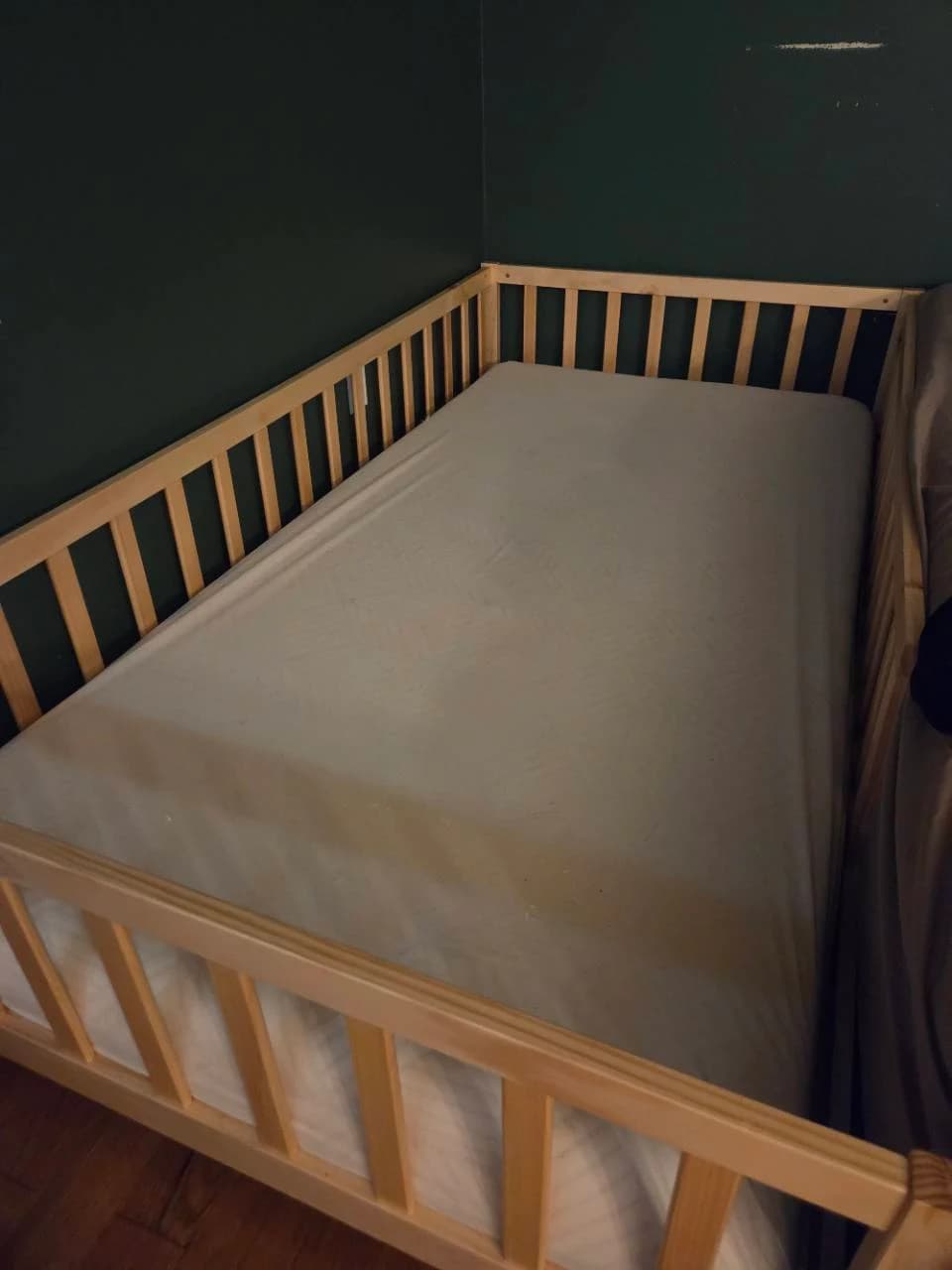
Suppose a rail rises 12 inches above the support. An 8-inch mattress leaves about 4 inches of effective rail above the sleep surface; a 5-inch mattress leaves about 7 inches. That difference can completely change how the rail functions.

Use the maximum thickness in the bed manual, even if a retailer markets a thicker mattress as “more comfortable.” Do not add a topper, pad or second mattress unless the frame and mattress instructions expressly permit it.

Read Floor Bed With Rails or Without Rails? only after checking the exact thickness.

Firmness and support

For a toddler product, use a mattress intended for the child's age and the exact frame. A deeply sinking adult mattress can make movement difficult and change the gaps around rails.

Look for:

  • flat, consistent support;
  • no broken springs or permanent sag;
  • edges that do not collapse away from the frame;
  • a cover in good condition; and
  • care instructions the family can actually follow.

“Orthopedic,” “Montessori,” “breathable” and “non-toxic” are marketing terms unless tied to a specific standard or test. They do not override fit.

Airflow under a floor-bed mattress

People release moisture while sleeping. Spills, humid air and a cold floor can add more. When the underside cannot dry, odor and mold can develop.

The approved frame may use slats or a ventilated support panel. Do not replace that support with plywood or place the mattress straight on the floor unless the manufacturer allows it.

Regular airflow routine

  • Pull bedding back each morning when practical.
  • Check the underside and floor weekly at first.
  • Lift or rotate only as the mattress instructions allow.
  • Dry spills immediately.
  • Keep room humidity controlled.
  • Vacuum dust without soaking the mattress or frame.
  • Investigate any musty smell rather than masking it.

The best interval depends on climate and floor type. A basement room, carpet over concrete or humid region deserves more frequent checks.

Mattress directly on carpet

Carpet can hold dust and moisture, and a mattress can prevent the area beneath it from drying. It can also make a low frame less stable than it was on the hard surface used in product photos.

Follow the frame and mattress surface instructions. If direct-on-carpet use is allowed, inspect underneath often and keep the carpet completely dry. Do not place plastic sheeting beneath the mattress unless approved; it may trap moisture rather than solve it.

Waterproof protector and fitted sheet

Choose a protector only if the mattress maker allows one. It should fit securely without bunching, changing firmness or preventing the fitted sheet from staying on.

Use the correct fitted-sheet size and check elastic condition. Multiple pads and thick toppers can increase total sleep-surface height beyond the frame limit.

New versus used mattress

A used mattress needs closer inspection for:

  • unknown spills or moisture;
  • smoke, pests or odor;
  • sagging and edge collapse;
  • torn cover or exposed foam;
  • missing fire or product labels; and
  • actual dimensions after years of use.

For a regulated toddler-bed frame, use the mattress type the instructions specify. For any bed, reject a mattress with structural damage or a history you cannot evaluate.

Mattress setup checklist

  • Child meets the frame's minimum age.
  • Frame model and manual identified.
  • Required mattress label confirmed.
  • Exact length, width and maximum thickness recorded.
  • Mattress fully expanded and measured.
  • Perimeter gaps inspected with bedding off.
  • Effective rail height checked.
  • No topper or extra mattress added.
  • Approved support/slat system installed.
  • Protector and fitted sheet fit without bunching.
  • Underside inspection schedule established.
  • Whole room childproofed using the Montessori floor-bed setup guide and safety checklist.

Infant safety note

An adult or kids mattress on the floor is not automatically an approved infant sleep product. For babies under one, the AAP recommends a compliant crib, bassinet, portable crib or play yard with a firm, flat surface and fitted sheet.

Do not use this toddler mattress guide to create an infant floor-bed setup.

Frequently Asked Questions

What size mattress fits a toddler floor bed?
Use the exact mattress label, length, width and maximum thickness in the frame manual. Floor beds may use a full-size crib, twin, Twin XL or full mattress, but those sizes are not interchangeable.
How thick should a floor-bed mattress be?
Never exceed the frame's written maximum. A thicker mattress reduces effective rail height and can change openings around the mattress.
Does a floor-bed mattress need slats?
Use the support system specified by the frame. Slats or a ventilated base often help airflow, but spacing and strength must match the design. Do not add or replace supports without approval.
How do I prevent mold under a floor mattress?
Use the approved ventilated support, manage room humidity, dry spills, inspect underneath regularly and address damp flooring or odor immediately.
Can a baby sleep on a firm twin mattress on the floor?
An ordinary twin mattress is not the AAP-recommended infant sleep product. Use a compliant crib, bassinet, portable crib or play yard for a baby under one.