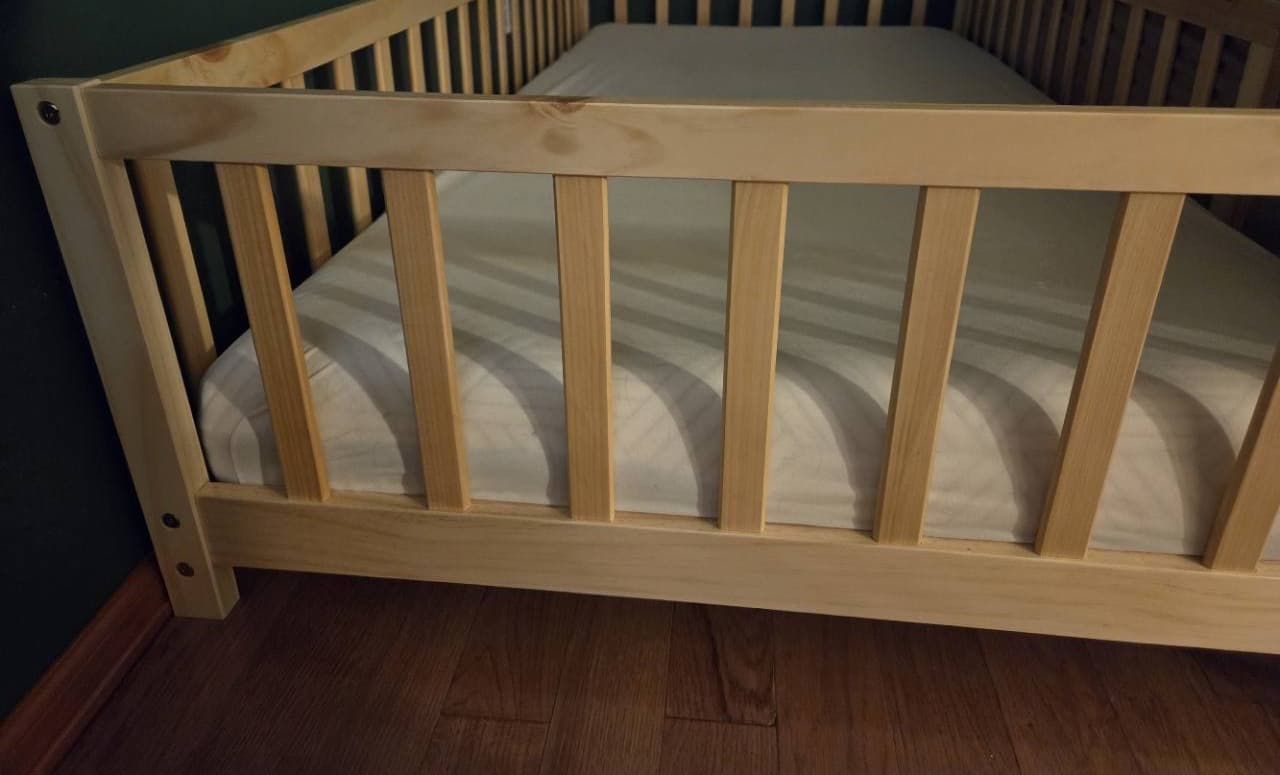
Moving from a crib to a floor bed changes more than the mattress height. It gives a toddler access to the entire room when adults are asleep. The transition works best when the child is ready, the bed fits correctly, and the room is treated as the new safety boundary.
The simple plan: Do not rush for décor. Choose the age-appropriate bed, childproof the room, keep the old bedtime routine, introduce one clear rule, and calmly repeat it for a week or two.
When is a toddler ready to leave the crib?
Many children transition sometime between the second and third birthdays, but behavior and product limits matter more than a social-media age.
HealthyChildren advises moving when a child can climb out of the crib. It also notes a height marker of about 35 inches, or when the crib rail is lower than three-quarters of the child's height. Always follow the crib manufacturer's own height, weight, and milestone limits first.
Other readiness signs include:
- the child can get on and off a low bed without diving or climbing over sides;
- bedtime routines are reasonably predictable;
- the child understands a simple “stay in your room” or “call for me” rule;
- the room can be fully childproofed; and
- the new bed's age and weight instructions fit the child.
A federal toddler bed is intended for children at least 15 months old and no more than 50 pounds. Twin floor-bed manufacturers may set a minimum of two years or older.
Do not transition an infant to an ordinary floor mattress
For babies under one, the AAP recommends a firm, flat sleep surface in a CPSC-compliant crib, bassinet, portable crib, or play yard with only a fitted sheet. An ordinary twin, toddler, or adult mattress on the floor is not automatically an infant sleep product.
If a baby is climbing or approaching a crib limit unusually early, talk with the pediatrician and crib maker instead of improvising. Read Are Floor Beds Safe for Babies?.
Step 1: Pick the least complicated correct bed
Good transition options include:
- a crib converted using its manufacturer-approved toddler kit;
- a labeled toddler bed using a correctly fitting full-size crib mattress;
- a twin floor bed whose stated minimum age fits the child; or
- a simple low kids' bed with an exact mattress and approved rail setup.
Measure the room, read the manual, and check current recalls before choosing a setup. Our Montessori floor-bed setup guide and safety checklist covers crib-mattress, twin, and full-size frames without pretending every “Montessori” label is a safety certification.
Step 2: Childproof the room before assembly day
Imagine the toddler awake at 3 a.m. with no adult in the room. Then inspect everything they can pull, climb, open, wrap around themselves, swallow, or switch on.
Anchor furniture
Secure dressers, bookshelves, televisions, mirrors, and storage furniture to the wall using appropriate hardware. Move tempting objects off high surfaces so the child is not rewarded for climbing.
Secure windows and cords
Keep the bed away from windows. Use appropriate window guards or stops, and make blind cords inaccessible. Remove monitor cables, charging cords, and hanging décor from the bed area.
Control doors and stairs
Gate stairs with hardware suited to the location. Decide how to prevent unsafe wandering without blocking emergency exit or caregiver access. Include the bedroom boundary in the family's fire plan.
Remove reachable hazards
Secure outlets, button batteries, magnets, medicines, toiletries, choking objects, heaters, fans, lamps, pet supplies, and water hazards. Recheck under furniture and inside low drawers.
CPSC's childproofing guide is a useful final walkthrough.
Step 3: Introduce the floor bed during the day
Let the child see the bed assembled and practice getting in and out through the intended opening. Explain one concrete rule, such as: “At night, your body rests in bed. If you need me, call my name.”
Keep the language positive and brief. Avoid promising that the bed will make them a “big kid” if a new sibling is taking the crib; that can make the move feel like eviction. Complete the transition well before the baby's arrival when possible.
Step 4: Preserve the familiar routine
Keep the same sequence the child already knows:
- bathroom or diaper;
- pajamas and teeth;
- two quiet books;
- song or cuddle;
- lights and sound environment; and
- the same good-night phrase.
The bed is the new variable. Do not also add a later bedtime, exciting bedroom toys, a new screen habit, and disappearing parental presence in the same week.
A realistic first-week plan
Nights 1–2: Keep expectations small
Show enthusiasm without turning bedtime into an event. Sit in the familiar place, finish the routine, and leave as usual. If the child gets up, return them calmly with a short phrase.
Nights 3–4: Repeat without negotiating
Leaving bed is often boundary testing, not proof that the setup failed. Use the same quiet response. Long explanations, snacks, extra stories, and play can accidentally reward each exit.
Nights 5–7: Adjust one thing at a time
If the child consistently leaves because the room is too bright, the nap is late, or a parent formerly stayed until sleep, address that specific pattern. Do not keep changing rules and furniture nightly.
If sleep becomes severely disrupted, behavior is unsafe, or the child appears distressed beyond an ordinary adjustment, pause and ask the pediatrician for individualized guidance.
What to do when a toddler will not stay in bed
Keep the room boring at night
Offer only a few quiet, safe items. Rotate stimulating toys out of the bedroom. A floor bed is an invitation to independence, not an all-night playroom.
Use a predictable return
Walk the child back, repeat the rule, and minimize attention. Consistency matters more than finding a clever phrase.
Consider an okay-to-wake cue
An age-appropriate light that changes color in the morning may help an older toddler understand when quiet time ends. Keep cords inaccessible and do not expect a device to replace supervision or a safe boundary.
Revisit timing
A child who is not sleepy may have a late nap, too much time in bed, or a changing sleep need. A child who is overtired can also become more active. Keep a brief sleep log and discuss persistent problems with the pediatrician.
Rails, roll-outs, and wall placement
If using rails, choose ones integrated with or expressly approved for the exact bed and mattress. CPSC says portable bed rails are typically intended for ages two to five on adult beds; they are never for children under two or a crib substitute.
Do not improvise wall padding, wedge the mattress, or build a pillow barricade. Follow the frame's placement instructions and keep the surrounding floor clear. Read Floor Bed With Rails or Without Rails?.
Naps and nighttime
Some children adapt faster if the first sleep in the new bed is a nap; others become too distracted in daylight. Either approach is reasonable. Choose the time when caregivers can be calm and consistent.
Once the change begins, avoid switching back and forth after every difficult sleep. If you do pause for safety or readiness, make a clear plan rather than presenting two beds as a nightly negotiation.
Common mistakes to avoid
- moving before the child meets the bed's minimum age;
- buying a mattress before choosing the frame;
- using a thick mattress that defeats rail height;
- assuming a house-frame design is safer;
- pushing the bed against a wall without checking gap rules;
- using an aftermarket rail with unknown compatibility;
- leaving furniture, windows, cords, or stairs unsecured;
- filling the room with exciting new toys; and
- blaming the child for exploring a boundary that changed overnight.
The transition checklist
- Current crib limits and climbing behavior checked.
- New bed's minimum age and weight limits fit the child.
- Exact mattress dimensions and thickness confirmed.
- Room fully childproofed from toddler height.
- Furniture anchored and windows/cords secured.
- Stair and doorway plan preserves emergency access.
- Bed introduced during the day.
- Bedtime routine written down and kept familiar.
- Caregivers agree on one calm return response.
- Pediatrician involved for safety, medical, or persistent sleep concerns.
For frame and room setup details, continue with the complete Montessori floor-bed guide.
