parenting

Floor Bed With Rails or Without Rails? A Safety-First Guide

By
Floor Bed With Rails or Without Rails? A Safety-First Guide

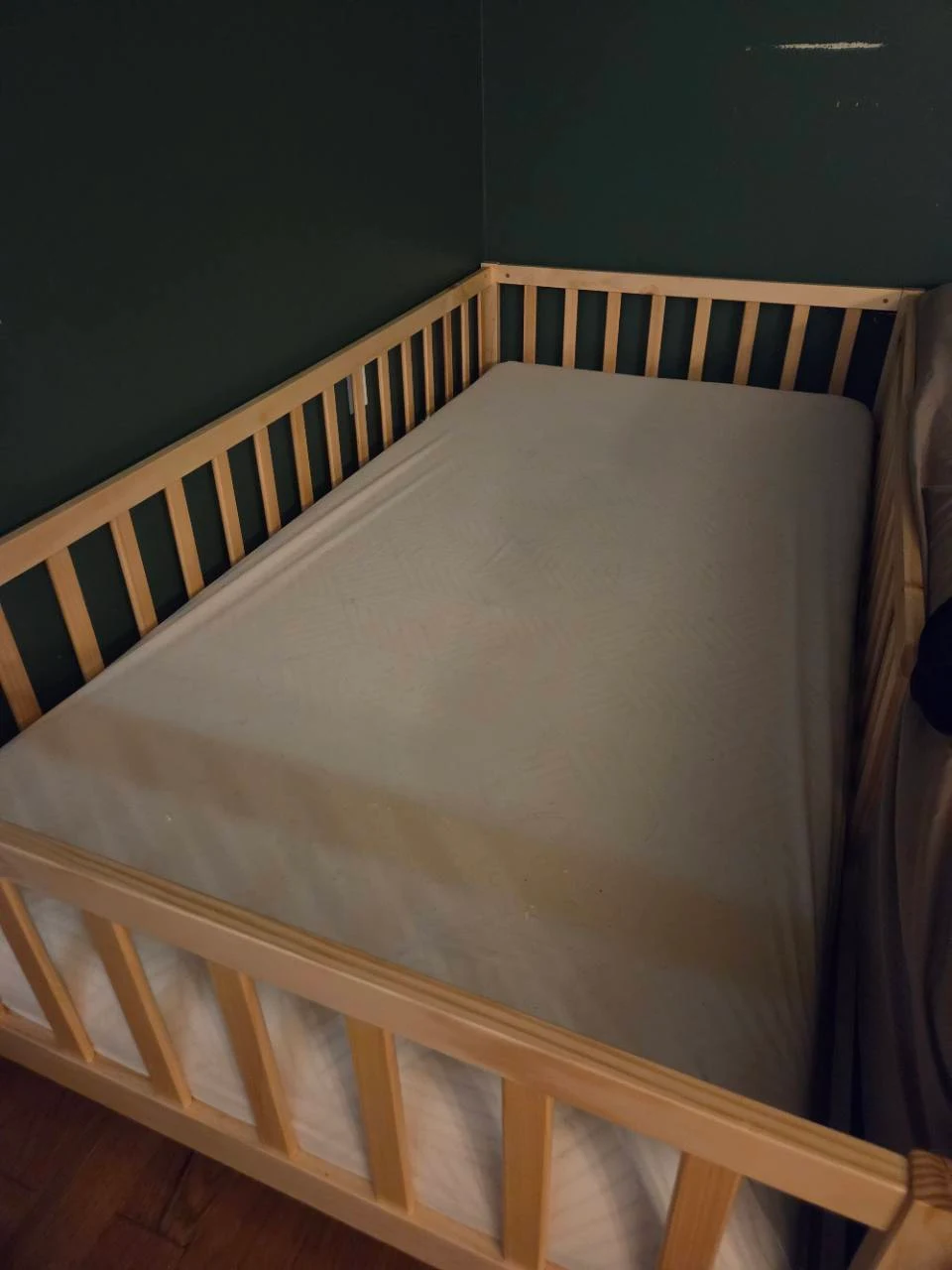
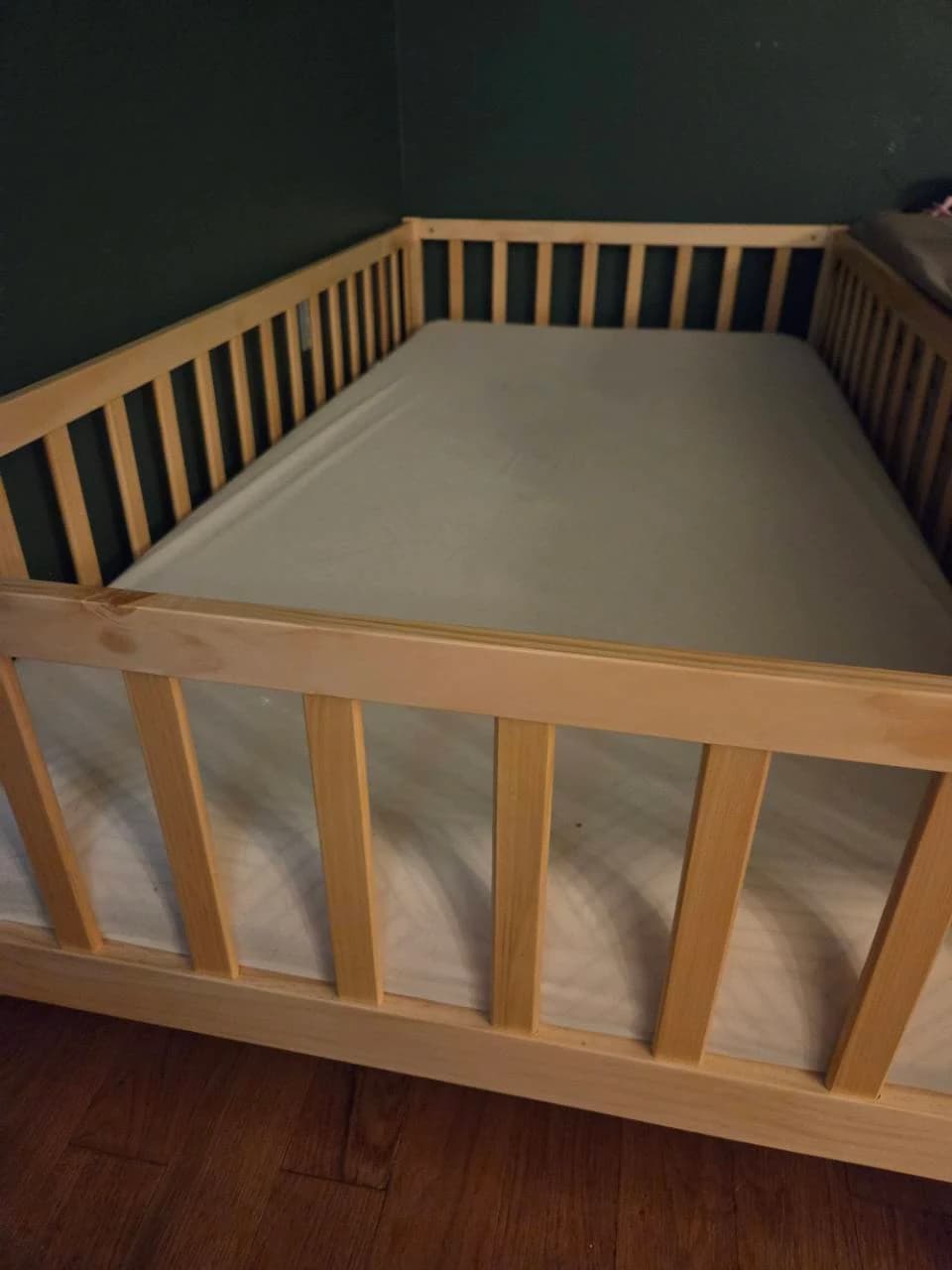
A floor bed with rails can reduce short roll-outs and give a toddler a familiar visual boundary. An open floor bed makes the exit obvious and avoids adding rail-to-mattress gaps. Neither is automatically safer in every room.

The right choice is the complete system: child, frame, mattress, rail, wall clearance, and room childproofing. A rail that was not designed for the bed can be more concerning than a six-inch roll onto a clear floor.

Bottom line: Prefer a built-in or manufacturer-approved rail with the exact permitted mattress. Do not add a generic portable rail to a floor bed unless both products explicitly allow that combination.

Rails vs. no rails at a glance

Comparing built-in rails and open floor beds

QuestionFloor bed with railsOpen floor bed
Roll-outsCan reduce short rolls when the rail remains high enough above the mattressA child may roll onto the nearby floor; height is low but the area must be completely clear
Entrapment pointsRequires careful checks at rail, mattress, frame, wall and openingsFewer components, but wall and furniture gaps still matter
Getting in and outUse the designed opening; climbing over rails defeats the purposeExit is obvious from either side
Mattress thicknessEspecially critical because a thick mattress reduces effective rail heightStill must match frame and support instructions
Best fitA child who rolls often and a frame tested with its railA ready child who can manage an open bed in a fully childproofed room

What a rail can do

A partial rail can:

  • reduce the chance of an ordinary sleep roll reaching the floor;
  • create a visual cue for where the sleep surface ends; and
  • make a crib-to-bed transition feel more familiar.

It cannot turn a twin bed into a crib, contain a determined climber, correct a poorly fitting mattress, or make the rest of the room safe. If a child repeatedly climbs over the rail, the fall height may become greater than with an open low frame.

The four gap checks that matter

1. Mattress to rail

The mattress must sit flush within the frame as instructed. A rail attached outside a soft, compressible mattress can open a child-sized pocket along the edge.

2. Rail height above the mattress

Bed makers often specify a maximum mattress thickness because rail height is measured from the top of the sleep surface. Adding a plush topper or thicker replacement mattress can make the rail ineffective.

3. Rail openings and endpoints

Look at the opening where the child enters and the points where the rail meets the headboard or frame. Do not modify the rail, remove required hardware, or install it backward to create a different access point.

4. Bed to wall or furniture

A bed pressed close—but not flush—to a wall can create a narrow gap. Follow the manufacturer’s placement rules. Do not assume that wedging a mattress or rail against a wall solves movement or entrapment concerns.

Built-in rail vs. portable bed rail

A built-in rail is part of the bed's intended design. A removable rail sold by the bed manufacturer may also be tested or specified for particular frame models, mattress sizes, and ages.

A portable bed rail is a different product category. CPSC says children's portable bed rails are intended to keep children from falling from adult beds and are typically for children ages two to five who can get in and out of an adult bed without help. Federal warnings state:

  • never use one for a child under two;
  • never use it as a crib substitute; and
  • use it only with the type and size of bed and mattress specified by the manufacturer.

CPSC's portable-bed-rail guidance explains the standard. A rail marketed for an adult twin mattress is not automatically compatible with a toddler floor frame.

When built-in rails make sense

Choose a frame with an integrated or expressly approved rail when:

  • the child meets the bed's minimum age and weight requirements;
  • the exact mattress keeps the required rail height;
  • the child rolls frequently but uses the designed opening;
  • the rail and frame have no unexplained openings or missing hardware;
  • the maker permits the planned wall clearance; and
  • the rest of the room is ready for free movement.

A federally regulated toddler bed can be a sensible first step. CPSC defines that category for children at least 15 months old and no more than 50 pounds using a full-size crib mattress. Its standard addresses entrapment, mattress support, guardrails, openings, and labeling.

When an open floor bed makes sense

An open frame may be simpler when:

  • the child can get in and out independently;
  • the bed is genuinely low;
  • the floor beside it can remain clear and comfortable;
  • the child tries to climb any rail;
  • the frame maker does not offer an approved rail; or
  • the family wants fewer mattress-to-rail interfaces to inspect.

Do not create a soft nest of pillows beside the bed. Loose cushions can become climbing steps, trip hazards, or obstacles in the exit path. If you use a bedside mat, it should be thin, firm enough for stable walking, permitted by the bed maker, and positioned without creating a gap.

A practical decision flow

  1. Identify the product category. Is this a labeled toddler bed, a twin kids' bed, or a generic platform?
  2. Check the child. Do they meet the stated age and weight limits and get in and out without climbing over sides?
  3. Check the mattress. Is it the exact length, width and allowed thickness?
  4. Check the rail source. Is it built in or approved for this exact model?
  5. Check every gap. Include wall, headboard, mattress, rail endpoints and nearby furniture.
  6. Check the room. Anchor furniture, secure windows and cords, gate stairs, and remove reachable hazards.
  7. Choose the simpler passing setup. If the rail introduces unclear compatibility or gaps, do not improvise.

Mattress fit can change the answer

Suppose a frame permits a six-inch mattress and provides enough rail above that surface. Swapping in a ten-inch pillow-top may leave little usable barrier. Conversely, a mattress that is an inch too narrow may shift beside the rail.

Use the toddler floor-bed mattress size and airflow guide to verify size and foundation before choosing rail configuration.

Wall placement deserves special care

Floor-bed photos frequently show one long side against a wall. That arrangement can save space, but it is only appropriate when the manufacturer permits it and the bed cannot move into a hazardous gap.

Also check for:

  • exterior-wall condensation behind the mattress;
  • baseboards that prevent the frame from sitting as designed;
  • outlets, window-covering cords, heaters, or vents;
  • shelves or art above the sleep surface; and
  • a rail configuration that traps the child between two boundaries.

If placement instructions are unclear, ask the manufacturer in writing instead of inventing a fix.

Rails do not make floor beds appropriate for babies

An ordinary mattress with rails is not a crib. The AAP recommends that babies sleep on a firm, flat mattress in a CPSC-compliant crib, bassinet, portable crib, or play yard with only a fitted sheet. CPSC's portable-rail warnings explicitly say never to use a portable rail for a child under two or as a crib substitute.

Read our complete guide to floor-bed safety for babies.

Our recommendation

For the first transition, choose a bed whose rail decision has already been solved by the manufacturer. A compliant crib-mattress toddler bed with integrated sides is easier to evaluate than a generic frame, oversized mattress, and separately purchased rail.

For an older, ready toddler, a simple open twin floor bed can work when the fall area is clear and the whole room is childproofed. Use the Montessori floor-bed setup guide and safety checklist before night one.

Frequently Asked Questions

Does a toddler floor bed need rails?
No. A genuinely low open frame may suit a ready toddler in a fully childproofed room. Rails can reduce roll-outs, but only when approved for the frame and used with the exact permitted mattress.
Can I put a portable bed rail on a Montessori floor bed?
Only if both the rail and bed manufacturers explicitly allow that exact combination. Portable rails are typically for ages two to five on adult beds and must never be used for children under two or as a crib substitute.
Should a floor bed be pushed against the wall?
Only when the frame instructions permit it and no gap can form. Also check moisture, baseboards, outlets, cords, windows and overhead objects.
How tall should the rail be above the mattress?
Use the bed or rail maker's specified mattress-thickness limit and required exposed rail height. There is no universal number that overrides the tested product instructions.
What can I place beside an open floor bed?
Keep the area uncluttered. If the manufacturer permits a mat, use a thin stable surface that does not create a trip or entrapment gap. Do not build a loose pillow nest.