
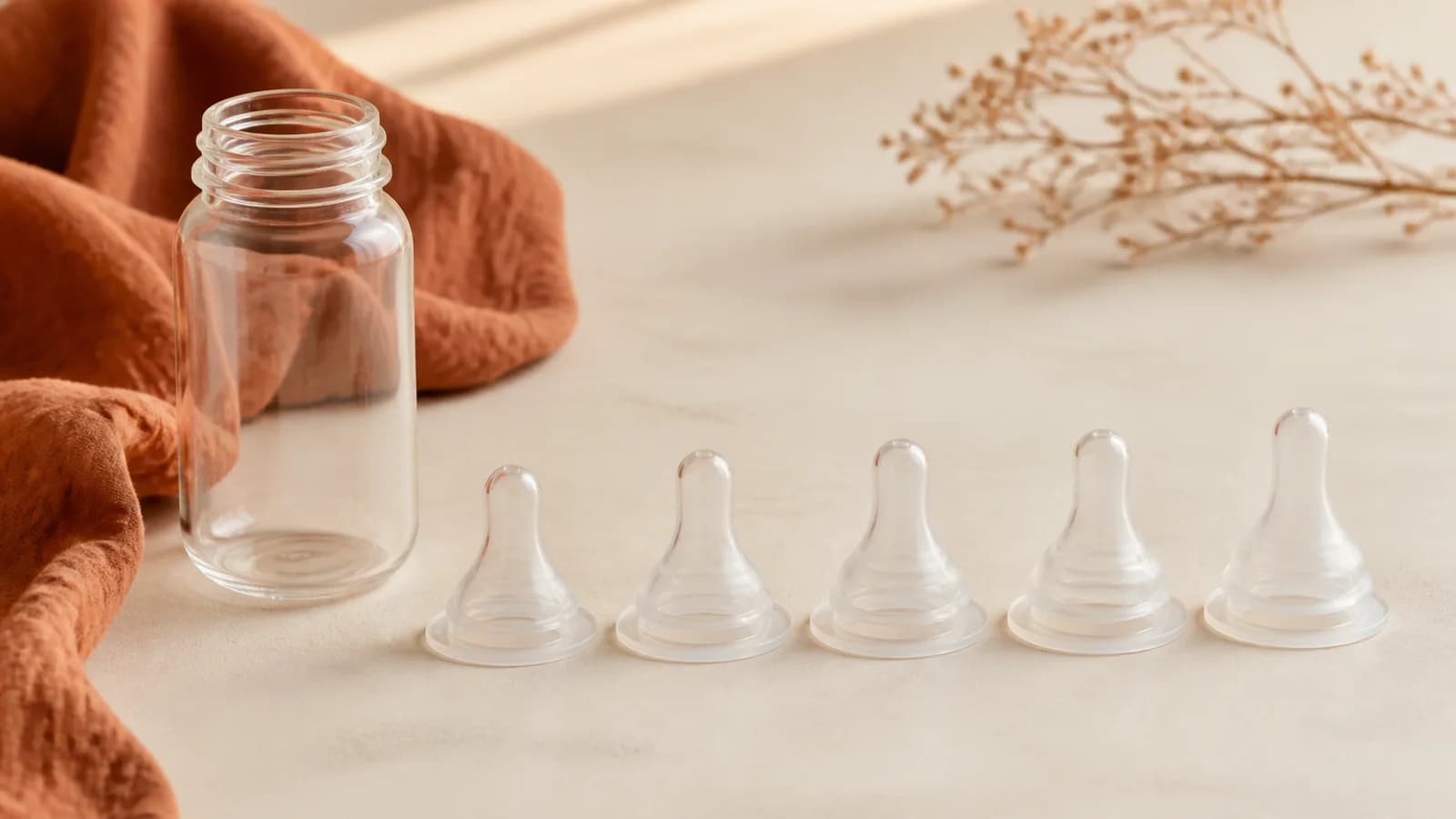
The current MAM nipple size chart runs from Size 0 extra slow through Size X for thicker liquids. The age printed next to each size is a manufacturer starting point, not a deadline to move up.
MAM nipple sizes and flow rates
MAM nipple size chart
Swipe across the table to see every column.
| MAM size | Flow description | Manufacturer starting age | Intended use |
|---|---|---|---|
| 0 | Extra slow | 0 months | Very small early-flow option; MAM describes it as suitable for breast milk and formula |
| 1 | Slow | 0+ months | Standard slow early flow |
| 2 | Medium | 2+ months | A middle flow for babies who need more than Size 1 |
| 3 | Fast | 4+ months | Faster flow for coordinated feeders who find Size 2 too slow |
| X | Thick liquids | 6+ months | Specialized opening for thicker liquids |
MAM says these ages are only recommendations and may vary with a baby's drinking pattern. The current chart appears in MAM's 2025 product instructions.
What is the difference between MAM 0 and 1?
Size 0 is the extra-slow newborn option with a smaller mouthpiece and opening. Size 1 is the regular slow flow from birth. A newborn does not automatically need 0, and a baby who starts with 0 does not need to move up on a fixed date.
Use the flow that supports comfortable milk transfer without flooding or exhausting your baby. Premature babies and babies with feeding or medical concerns may need a plan from a pediatrician or feeding specialist.
When to move from MAM 1 to 2
Consider testing Size 2 when Size 1 has become consistently effortful and you have ruled out a clog, incorrect assembly, a sealed air valve, and a temporary feeding change. Useful clues include:
- Feeds repeatedly taking much longer than usual
- Strong sucking with little transfer
- Frustration or nipple biting
- Falling asleep from effort before taking a typical amount
Try only the adjacent size. Move back to Size 1 if Size 2 causes gulping, coughing, leaking, hard swallowing, repeated pulling away, or breathlessness.
Our bottle nipple flow guide separates a real flow mismatch from assembly problems.
What is MAM Size X?
Size X is intended for thicker liquids. It is not simply the next automatic step after Size 3. Do not thicken breast milk or formula or cut a nipple opening without individualized clinical instructions. If a pediatrician or feeding team recommends thickening, ask which recipe and nipple to use.
Why a MAM nipple collapses
MAM nipples include an air valve designed to allow smooth flow and help prevent collapse. If the nipple folds inward:
- Stop and check that every part belongs to the same MAM bottle system.
- Clean and inspect the nipple opening and air valve.
- Reseat the nipple flat in its collar.
- Do not overtighten the ring.
- Replace damaged, sticky, thinned, or weak silicone.
- If assembly is correct, reassess whether the current flow requires too much suction.
See the full bottle nipple collapse troubleshooting guide.
MAM compatibility
Use MAM nipples with the MAM bottle and collar specified on the package. A nipple from another brand may appear to fit but can leak or vent incorrectly. Do not rely on an unofficial compatibility list for an infant feeding system.
Cleaning and inspection
Separate every bottle part and clean after each feed. The CDC recommends daily sanitizing for extra protection if the baby is under 2 months, was born prematurely, or has a weakened immune system. Always follow both the current CDC cleaning guidance and the MAM instructions.
Inspect before each use and discard a nipple at the first sign of damage or weakness. Never enlarge the hole.
Compare MAM with other systems
- 10-brand baby bottle nipple chart
- Evenflo nipple sizes and markings
- Philips Avent nipple flows
- Dr. Brown’s nipple levels
- Lansinoh nipple flow rates
This article is general education, not medical advice. Contact your child's clinician for recurring coughing, choking, breathing changes, poor intake, or growth concerns.