
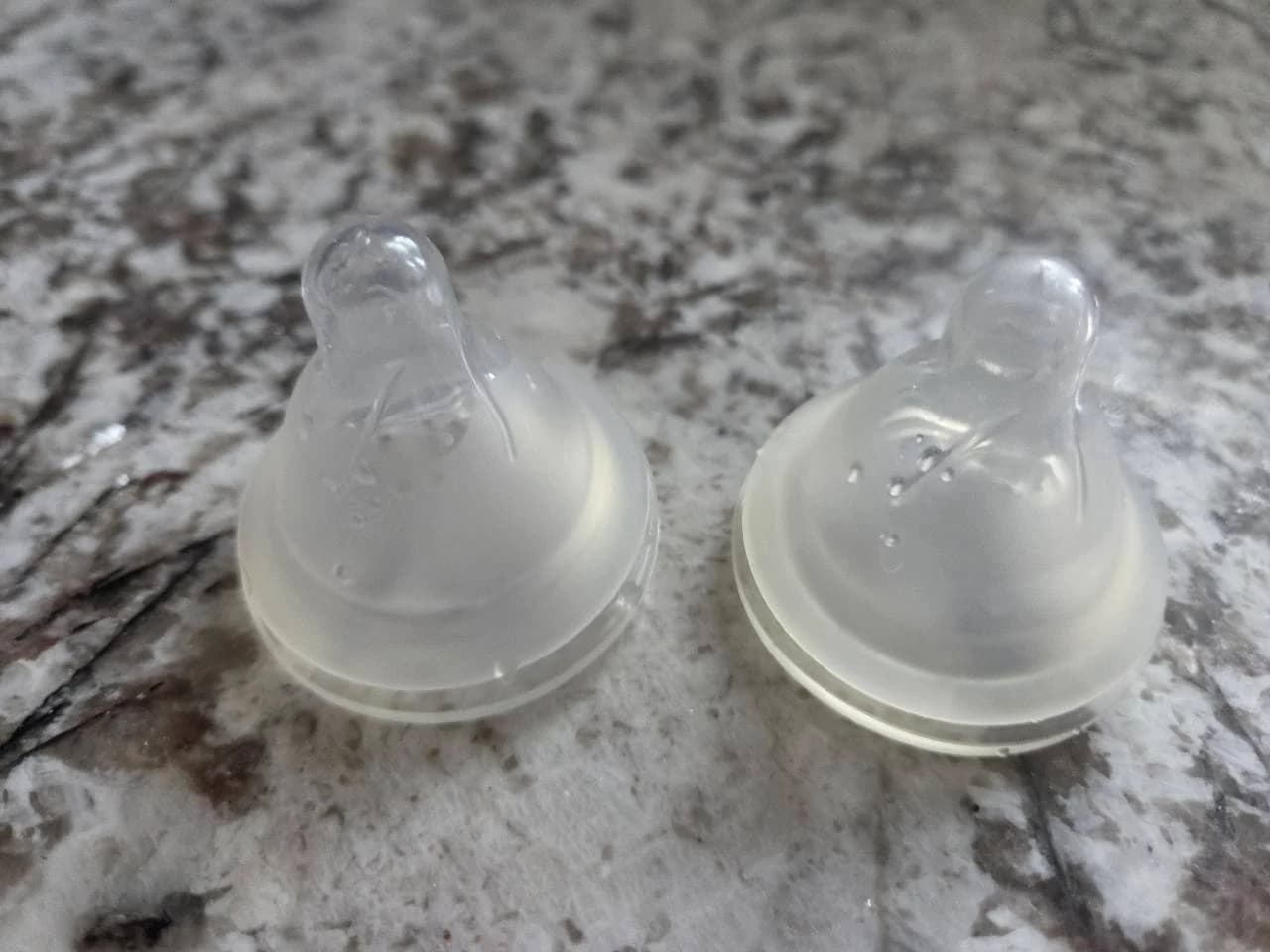
A bottle nipple collapses when the pressure inside the bottle drops and air cannot replace the milk being removed—or when the nipple is so soft or slow for the baby's suction that it folds inward. In practice, venting and assembly are the first places to look.
The seven-step fix
1. Pause the feed
Do not ask your baby to keep sucking on a flattened nipple. Break the seal, let the nipple return to shape, and inspect the bottle.
2. Match the nipple and collar
Use parts from the same manufacturer-approved bottle family. A standard-neck nipple in a different collar may look close enough while blocking the air path. Evenflo specifically says mixing a nipple from one model with another model's cap ring can cause venting trouble and collapse.
3. Open and clean the vent
Find the valve or slit identified in the product manual. Milk residue can seal it. Some silicone vents also stick to themselves after washing.
For Evenflo Balance+, the manufacturer says to turn the nipple upside down, locate the small semicircular vent at the base, and gently squeeze the slit open before each feeding. Other brands use different vent designs—follow the exact instructions rather than copying that step universally.
4. Reseat the nipple rim
Pull the nipple fully and evenly through the collar. Turn the assembled collar over and check that the silicone lip lies flat, not folded, twisted, or pinched.
5. Loosen an overtight collar
Some systems cannot vent when the collar is tightened as hard as possible. Reattach it only as the manufacturer directs—secure enough not to leak, without crushing the vent path.
6. Inspect for damage or stickiness
Replace silicone that is torn, weak, sticky, swollen, thinned, misshapen, or damaged around the opening or valve. Do not repair it with glue and do not cut the nipple.
7. Reassess the flow
If the correct parts are clean, intact, seated, vented, and not overtightened, the current flow may require more suction than your baby can comfortably apply. Test one adjacent flow while watching for too-fast signs.
Why loosening the collar helps
As milk leaves a sealed bottle, air must enter. If the vent cannot admit air, the pressure inside drops. The flexible nipple becomes the easiest part to pull inward. Loosening only helps when overtightening is blocking a manufacturer-designed air path; a leaking or damaged bottle needs replacement or product support, not a permanently loose cap.
Why a nipple keeps collapsing after cleaning
Common reasons include:
- A vent slit that self-seals again
- Residue hidden in a small valve
- The nipple rim bunching during assembly
- An incompatible replacement collar
- A ring tightened differently by another caregiver
- Silicone that has become unusually soft or weak
- Flow that remains too slow for the baby's suction
Compare the setup with the current manufacturer diagram. If the problem began after replacing only one part, that part or its fit is a strong suspect.
Should I poke a bigger hole?
No. Cutting or puncturing changes flow unpredictably and can tear the nipple. Buy the next manufacturer-made flow or contact the bottle company's support team.
If milk is medically thickened, ask the prescribing clinician which nipple and recipe to use. Do not create a homemade Y-cut.
Clean the vent without damaging it
The CDC recommends separating all bottle parts after every feed, washing in a dedicated basin or dishwasher as appropriate, squeezing water through nipple holes, and air-drying fully. Follow the bottle maker's method for small valves; avoid sharp tools that can enlarge or tear silicone. See the current CDC feeding-item cleaning guide.
What we use for hand-washing
We use Dapple Baby Bottle & Dish Soap when we wash our bottles by hand.
Dapple's fragrance-free bottle soap is on Amazon in a three-pack if you want to check it out.
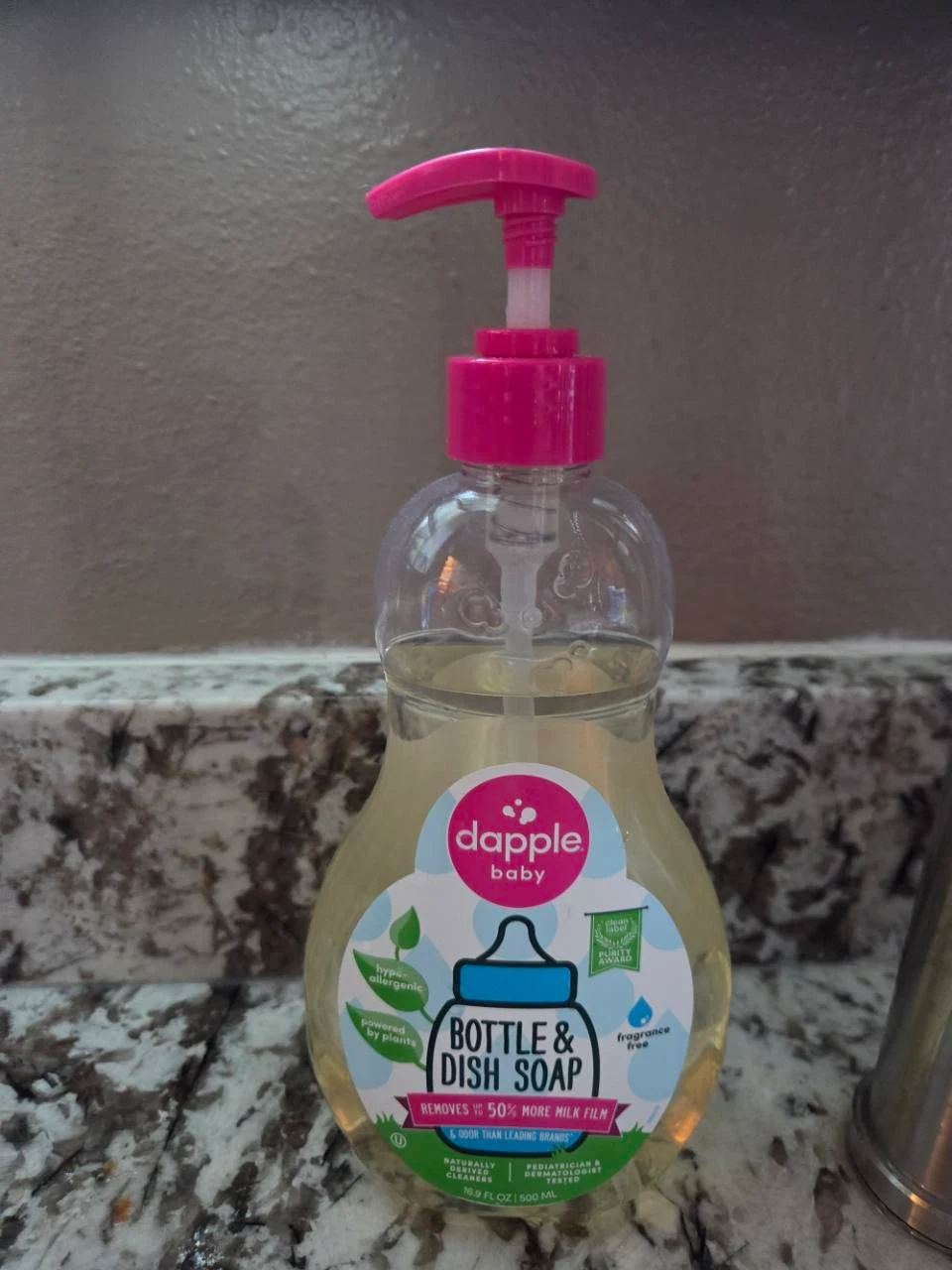
Dapple is what we keep by the sink for hand-washing bottles.
Soap is only one part of hand-washing. The CDC's method uses a dedicated clean basin and bottle brush, then rinsing and complete air-drying. Cleaning and sanitizing are separate steps; follow the feeding-item manufacturer's directions. Cleaning source checked September 7, 2026.
When collapse points to a feeding issue
If collapse comes with very long feeds, frustration, fatigue, poor intake, or growth concerns, contact your pediatrician or feeding specialist. If a faster nipple causes coughing, choking, leakage, or breathing difficulty, go back down and get advice rather than alternating flows at random.
Related guides
This article is general education, not medical advice.