
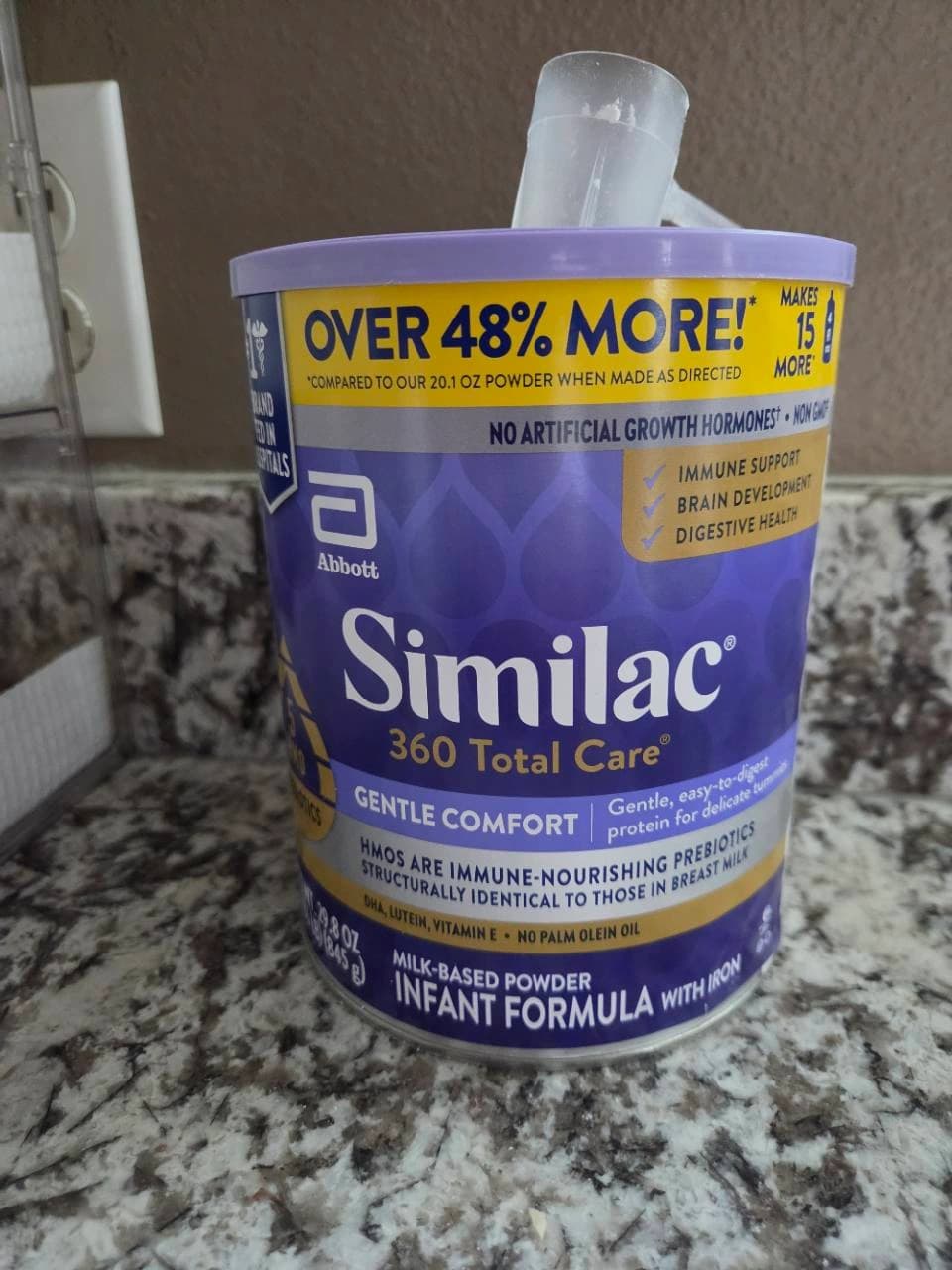
The biggest difference in Similac Total Comfort vs Sensitive is protein. Total Comfort products use partially hydrolyzed whey protein—protein broken into smaller pieces. Sensitive products use intact milk protein isolate while reducing lactose and relying on other carbohydrates.
Both product families are marketed for fussiness and gas associated with lactose sensitivity. Neither is an extensively hydrolyzed hypoallergenic formula for diagnosed cow's-milk protein allergy.
Name check: Similac currently sells multiple generations, including Similac Pro-Total Comfort, Similac 360 Total Care Gentle Comfort, Similac Sensitive, and Similac 360 Total Care Sensitive. Compare the exact front label and ingredient panel, not only the words “comfort” and “sensitive.”
Total Comfort vs Sensitive chart
Current Similac comfort and sensitive formula differences
Swipe across the table to see every column.
| Feature | Total/Gentle Comfort family | Sensitive family |
|---|---|---|
| Protein | Partially hydrolyzed whey protein | Intact milk protein isolate |
| Primary formula idea | Reduced lactose plus protein that is partially broken down | Reduced lactose with intact milk protein |
| Powder carbohydrate shown on current labels | Corn maltodextrin and sugar | Corn syrup and sugar |
| Current 360 HMO blend | 360 Gentle Comfort lists 5 HMOs | 360 Sensitive lists 5 HMOs |
| Older/other version | Pro-Total Comfort lists 2’-FL HMO and FOS | Standard Sensitive lists FOS rather than the 360 five-HMO blend |
| Milk-protein allergy formula | No | No |
| Most useful decision question | Is partially hydrolyzed protein part of the pediatrician’s plan? | Is reduced lactose with intact protein the intended category? |
Details were checked August 23, 2026 against the current official pages for 360 Total Care Gentle Comfort, Pro-Total Comfort, 360 Total Care Sensitive, and Similac Sensitive. Product availability and labels can change.
What “Total Comfort” means
The Total/Gentle Comfort family uses whey protein hydrolysate. “Partially hydrolyzed” means the milk protein has been broken into smaller pieces, not removed.
Current Similac 360 Total Care Gentle Comfort lists corn maltodextrin, whey protein hydrolysate, vegetable oils, sugar, and five HMOs among its key ingredients. Similac markets it for babies with fussiness and gas who have difficulty tolerating other milk-based formulas due to lactose sensitivity.
Older or separately stocked Pro-Total Comfort has the same broad protein category but a different prebiotic package: its current page lists 2'-FL HMO and FOS rather than the 360 product's five-HMO blend.
Do not assume “gentle” means dairy-free or hypoallergenic. The protein still comes from milk.
The ingredient panel on our can
The nutrition panel and ingredient list sit together on the side of the Gentle Comfort can. Check the full product name and ingredients, since several Similac products use similar purple packaging.
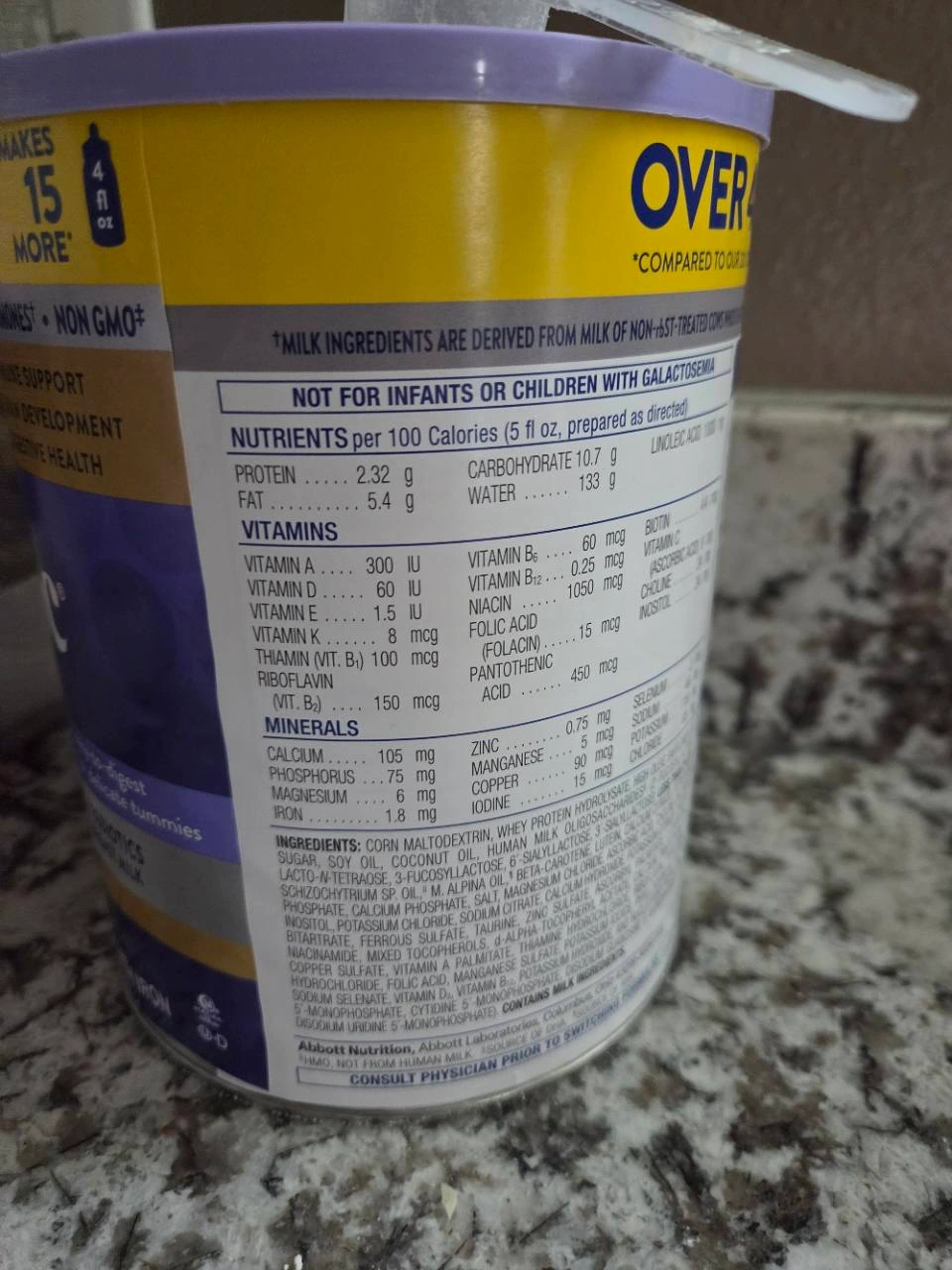
The ingredients and nutrition panel on our Gentle Comfort can. Tap to take a closer look.
What “Sensitive” means
Similac Sensitive and 360 Total Care Sensitive use milk protein isolate, which is intact, with corn syrup or maltodextrin depending on powder versus ready-to-feed format and product version.
Similac markets Sensitive for fussiness and gas due to lactose sensitivity. That is a different design from breaking down the protein.
The standard and 360 Sensitive products also differ in prebiotics. The 360 powder lists five HMOs, while the standard Sensitive page lists FOS.
Why protein structure matters
Two babies can have similar-looking fussiness for different reasons. A formula with reduced lactose does not address every protein-related issue, and partially hydrolyzed protein is not the same as the extensively hydrolyzed protein used in hypoallergenic formulas.
The FDA describes extensively hydrolyzed and amino-acid formulas as specialty categories used for conditions such as milk-protein allergy. Do not self-diagnose an allergy based on gas alone.
Call the pediatrician for blood or significant mucus in stool, repeated vomiting, hives, swelling, wheezing, breathing trouble, poor growth, or persistent feeding distress.
Is lactose intolerance common in babies?
True primary lactose intolerance is uncommon in young infants. Temporary lactose digestion problems can occur in specific situations, and rare disorders such as galactosemia require medical management.
Both Similac product pages direct families to talk with the baby's doctor before choosing or switching. Product labels also state restrictions such as not using certain formulas for infants or children with galactosemia.
Does one cause softer poop?
Individual stool response varies. The current 360 Gentle Comfort page says it has no palm olein oil and is designed to help promote softer stools, but that manufacturer statement is not a guarantee for every baby.
Look at the full pattern:
- soft versus hard stool;
- feeding comfort and volume;
- wet diapers;
- vomiting or spit-up;
- rash, blood, or mucus; and
- growth.
Noisy straining followed by soft poop may be infant dyschezia, not proof the formula is wrong.
How to compare the cans in front of you
- Read the complete product name, including 360, Pro, or Gentle.
- Compare powder with powder; ready-to-feed can list different carbohydrate forms and stabilizers.
- Find the protein source and whether it is intact or partially hydrolyzed.
- Check the carbohydrate source and allergen statement.
- Note the HMO or prebiotic blend instead of assuming all blue or purple cans match.
- Use the exact scoop and mixing directions supplied with that can.
- Check the current use-by date, lot, and recall information.
If you are comparing store brands too, the Kroger Comforts formula guide explains the product families and what an equivalent label means.
The preparation panel is a separate check
Similac prints the preparation directions and mixing guide on the back of the can. Use the instructions and scoop supplied with your exact product.
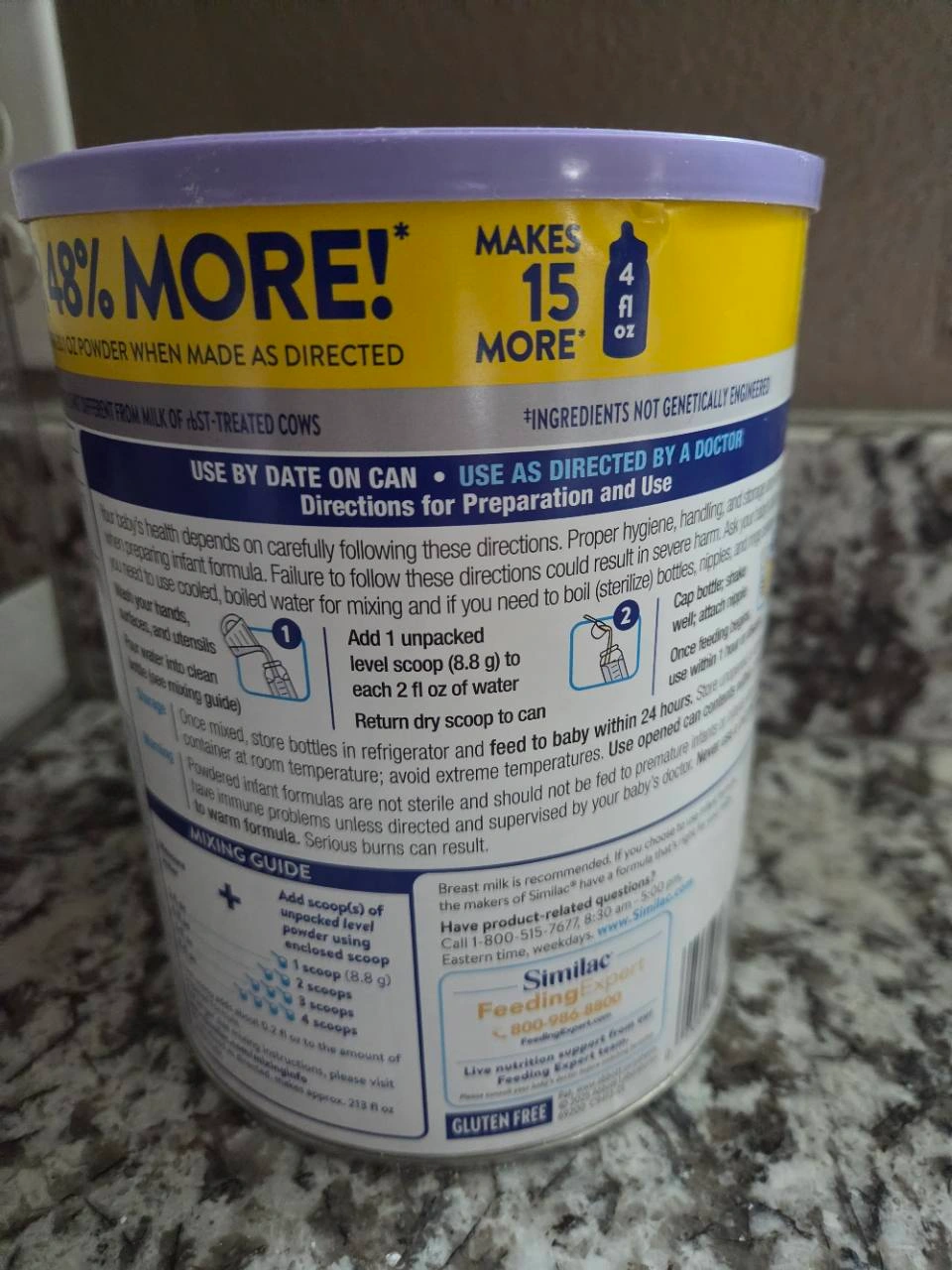
The mixing directions on our Gentle Comfort can. Tap to enlarge the label.
Bottom line
Choose between Total Comfort and Sensitive based on the category the pediatrician intends—not the front-label adjective. Comfort adds partially hydrolyzed whey protein to the reduced-lactose approach; Sensitive reduces lactose while keeping intact milk protein. Current 360 versions also have different prebiotic packages from older standard or Pro versions.
Sources checked August 2026: FDA infant formula guidance for parents and caregivers, CDC formula preparation guidance, and the current Similac manufacturer pages for 360 Total Care Gentle Comfort and 360 Total Care Sensitive. Compare the exact product form and label before switching.