
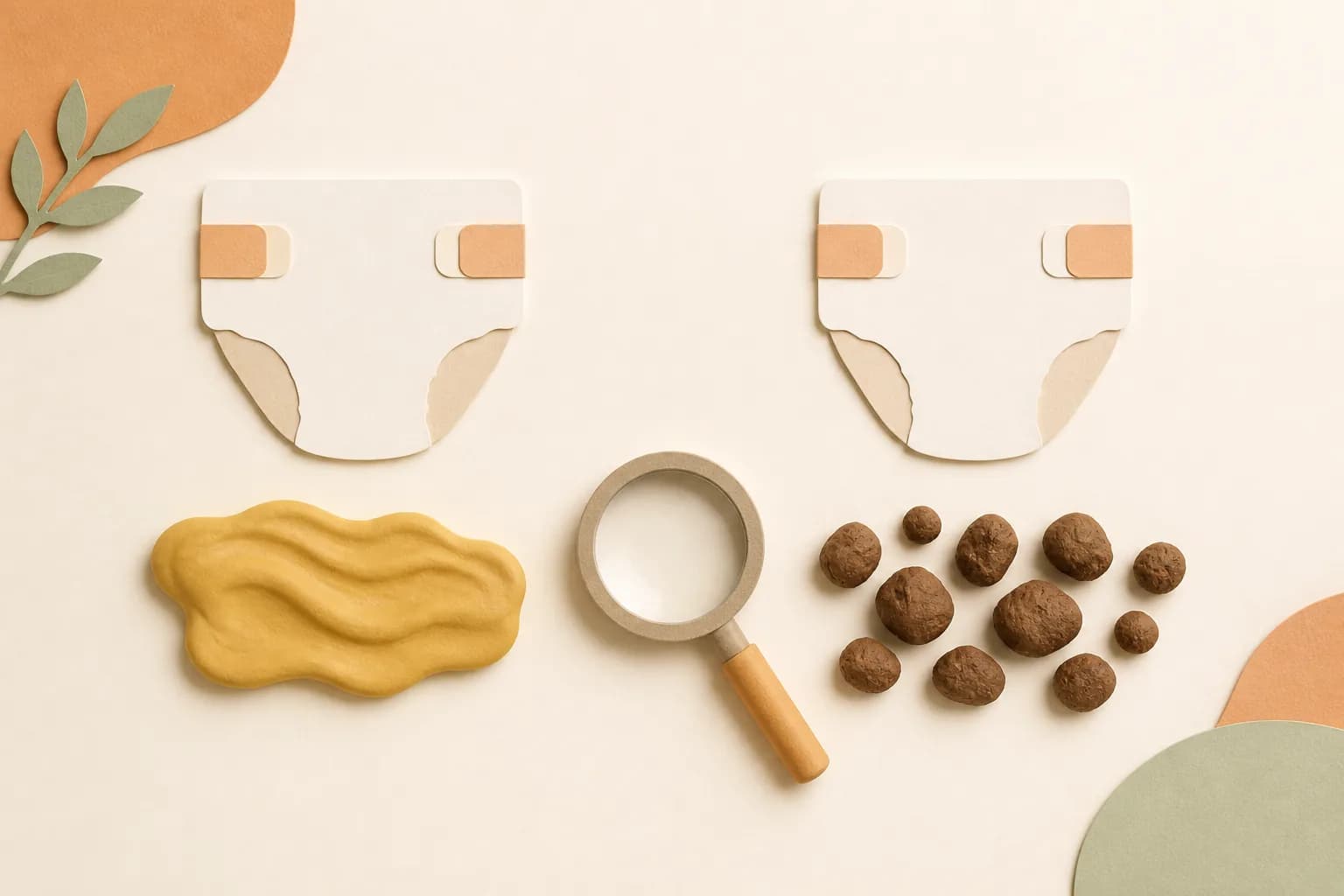
Soft poop after loud grunting is usually different from constipation. Hard, dry, firm, or pellet-like poop is the clue that matters most. Babies can turn red, cry, pull up their legs, and work dramatically while learning the coordination required to pass a completely soft stool.
The diaper tells you more than the sound effects.
Call-first note: A newborn or young infant with hard stool, blood, repeated vomiting, a swollen belly, fever, poor feeding, fewer wet diapers, unusual sleepiness, or poor growth needs medical guidance rather than an internet treatment.
Soft straining vs hard poop chart
Normal straining and constipation clues
Swipe across the table to see every column.
| What you observe | More consistent with | What to do |
|---|---|---|
| Grunting, crying, or red face followed by soft or pasty poop | Normal straining or infant dyschezia | Comfort, observe, and mention persistent concerns to the pediatrician |
| Soft poop after one or two days without a bowel movement | A variable normal schedule may be possible | Look at feeding, hydration, age, growth, and the baby’s baseline |
| Dry balls, firm pellets, or a hard formed stool | Constipation | Call for age-appropriate pediatric advice |
| Blood streak with hard painful stool | Possible small fissure, but needs assessment | Contact the pediatrician |
| Blood or mucus with vomiting, rash, poor growth, or feeding distress | Possible problem beyond simple constipation | Seek medical evaluation |
| Green vomit, swollen abdomen, severe lethargy, or very sick appearance | Urgent warning sign | Seek urgent medical care |
Normal newborn straining can look intense
The AAP explains that infants often work hard to have a bowel movement. Lying down provides less mechanical help than sitting on a toilet, abdominal muscles are still developing, and the baby is learning to push while relaxing the pelvic floor.
That can produce:
- grunting;
- red or purple facial color during effort;
- brief crying;
- drawing up or straightening the legs; and
- several minutes of pushing.
If the result is soft poop and the baby is otherwise feeding, urinating, and growing, infant dyschezia may be the explanation.
What hard baby poop looks like
Constipated stool may be:
- small hard pellets;
- dry balls pressed together;
- an unusually firm formed piece;
- difficult or painful to pass; or
- accompanied by a small streak of bright blood from irritated tissue.
Photos can help a pediatrician judge texture and color more accurately than a description such as “weird” or “clay-like.” Keep the photo private and include the baby's age, feeding method, formula and preparation ratio, symptom timing, wet diapers, vomiting, and behavior.
Frequency is not the whole diagnosis
Some babies poop several times per day; others go longer. The pattern changes with age and feeding method. A formula-fed baby may go a day or two between stools and still pass a soft bowel movement.
The AAP's infant constipation guide emphasizes stool hardness and symptoms. A calendar cannot show texture, hydration, pain, or growth.
For a baby in the first month, less stool can also raise feeding-intake questions. Call rather than assuming the baby simply has a slow schedule.
Formula-fed baby: check the bottle before the brand
If powdered formula is over-concentrated, the baby receives too little water. If it is over-diluted, the baby receives inadequate nutrition and may develop dangerous electrolyte problems.
Confirm:
- water is measured first;
- the scoop belongs to that exact formula;
- scoops are level, not packed or heaped;
- the water-to-powder ratio matches the can; and
- no cereal, thickener, supplement, or extra powder was added without clinician direction.
Do not add extra water to “help constipation.” Correct the next bottle according to the label and call the pediatrician about the hard stool.
Stool changes after switching formula
A different formula can change color, smell, consistency, and frequency. That does not make every change harmful, and it does not make hard painful stool something to ignore.
Track the switch date and complete symptom pattern. Avoid changing formulas repeatedly without a plan; each change resets the variables and makes the response harder to interpret.
For a Kendamil-specific transition, see Does Kendamil Cause Constipation?.
Our family's formula search
Enfamil NeuroPro Gentlease was one of the formulas we tried while figuring out our baby's constipation.
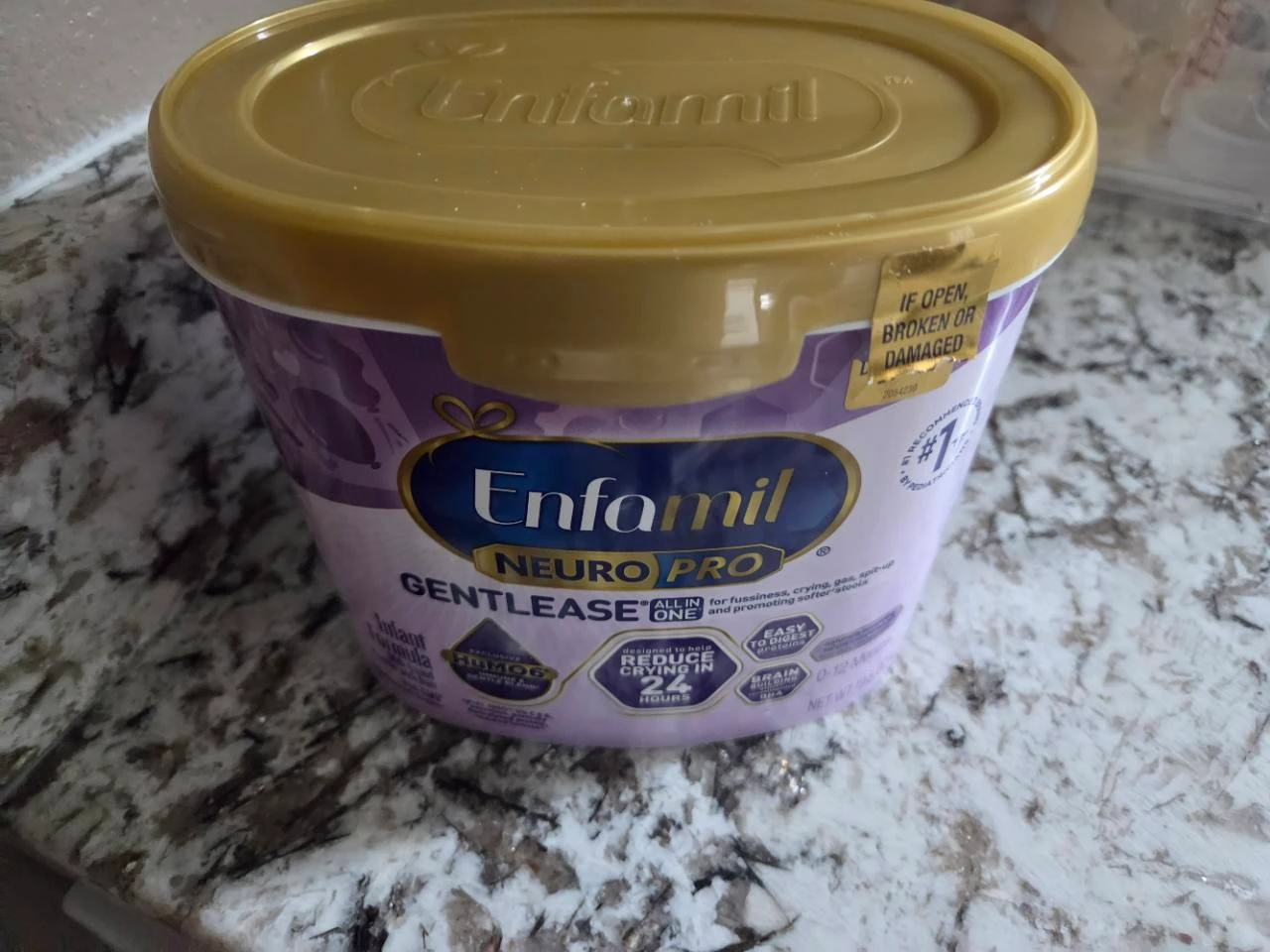
Gentlease was part of our search for something that would help with the constipation.
Do not improvise constipation treatments
Do not routinely use:
- rectal stimulation;
- suppositories or enemas;
- corn syrup or other sweeteners;
- extra water in formula;
- juice for a newborn;
- cereal in a bottle; or
- adult or over-the-counter laxatives.
Age, feeding method, medical history, and the cause determine safe treatment. Get the dose and method from the child's clinician, not a generic comment thread.
When to call urgently
Seek urgent medical guidance when hard or absent stool occurs with green vomiting, repeated vomiting, a distended or very firm abdomen, marked weakness or sleepiness, trouble breathing, severe pain, dehydration signs, or a baby who looks very ill.
Call promptly for blood, ongoing pain, poor feeding, fewer wet diapers, fever, weight or growth concerns, or constipation in a very young newborn.
Bottom line
The face can be dramatic and the poop can still be normal. Soft stool after straining points toward immature coordination; hard, dry, painful stool points toward constipation. Check formula preparation, photograph the diaper if useful, and ask the pediatrician for treatment rather than changing dilution or stimulating the rectum.
Sources checked August 2026: AAP infant constipation guidance, FDA infant formula guidance for parents and caregivers, and CDC formula preparation guidance. This guide cannot diagnose a baby; call the pediatrician for persistent symptoms or any red flag.