
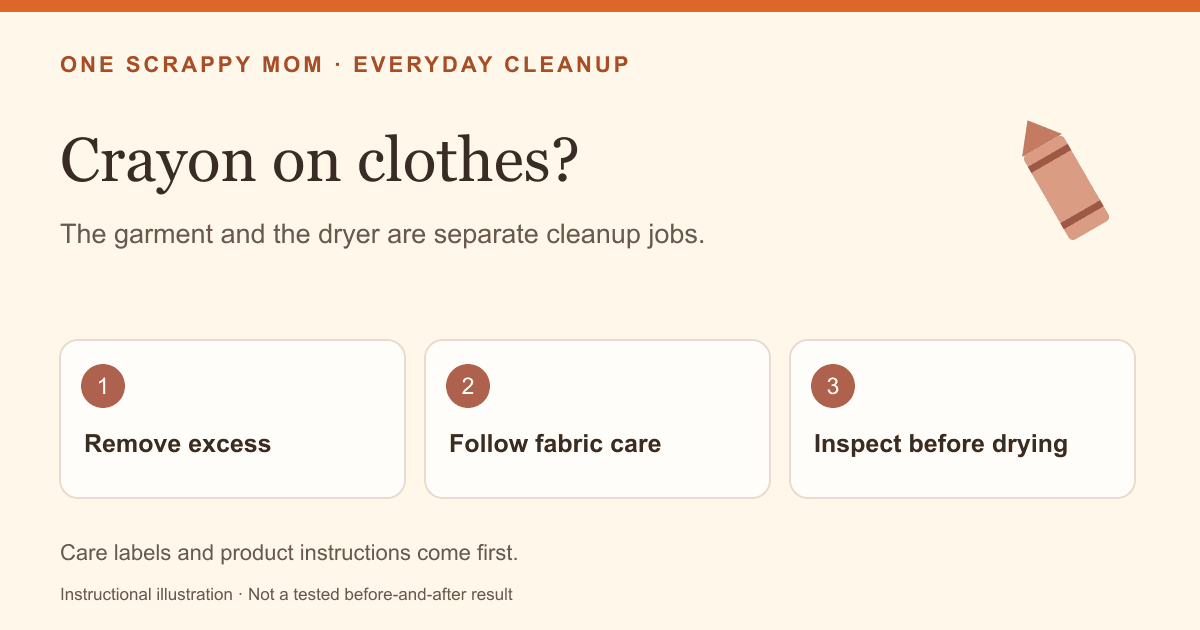
For crayon on washable clothes, remove loose excess, pretreat with a fabric-compatible method, launder within the care label's limits, and inspect before machine drying. If a crayon melted in the dryer, pause new loads: the clothes and the appliance are two separate cleanup jobs.
This guide uses Crayola, Tide and appliance-care sources. One Scrappy Mom has not performed a comparative removal test; the illustration is not a before-and-after result. Regular wax crayons, washable crayons and other art sticks can have different instructions.
A scribble is not the same job as a whole melted load
Start with the garment labels and the crayon wrapper if you have it. Sort affected clothes by their care requirements instead of assuming the entire load can tolerate the hottest wash. Put aside dry-clean-only pieces and delicate decorated items for professional advice.
Choose the right crayon-cleanup starting point
| Situation | First action |
|---|---|
| A few waxy marks on washable fabric | Remove loose excess gently, then choose a compatible pretreatment. |
| Melted crayon across several garments | Separate by care label and inspect the appliance before running more loads. |
| A mark on dry-clean-only clothing | Tell a professional cleaner what caused it and what has already been applied. |
| Color remains but there is no loose wax | Reassess the stain; harder scraping will not remove a flat color mark. |
How to treat crayon on washable clothes
1. Lift loose excess without damaging the weave
Remove what lifts easily using a dull utensil edge. Don't saw at the shirt or stretch the fabric against a hardened patch. Lay it where you can see the marks clearly and check cuffs, seams and pockets, not just the obvious front stain.
2. Choose one compatible pretreatment
Crayola's regular-crayon fabric instructions cover fresh, heat-set and melted marks. They describe removing excess, applying liquid dish soap briefly, working it under warm water, and washing with an appropriate laundry additive within the fabric's temperature limits, followed by air drying.
Alternatively, Tide's crayon guide describes a liquid-laundry-detergent pretreatment. Match the method to the actual product and garment. Don't combine every brand's instructions into a larger homemade recipe. Rinse out hand-applied dish soap before machine washing rather than pouring it into the washer as laundry detergent.
3. Wash according to the garment and laundry-product labels
The hottest temperature a fabric allows is not automatically the hottest setting on the machine. Check trims and printed areas too. Use an additive only if both its label and the garment allow it; “white shirt” alone does not establish bleach compatibility.
4. Inspect before another dryer cycle
Crayola calls for air drying, and Tide warns against machine drying while the stain remains. Look in good light after washing. If you repeat an approved treatment, compare the result instead of assuming another cycle will finish the job.
A crayon melted in the dryer. Now what?
Stop adding clean laundry and let the appliance cool before inspecting it under the manual's safety instructions. Remove the clothes and remaining crayon pieces. Check the model number and look up the manufacturer's interior-cleaning procedure.
Do not transfer a fabric pretreatment into the dryer drum. Whirlpool's dryer maintenance guide specifies interior-cleaning methods and warns against flammable materials. Your own model's manual controls; this is not an instruction to disassemble the machine or heat it to melt wax.
Avoid solvent sprays, gasoline, lighter fluid or an internet cleaning cocktail. If you already applied a flammable product, don't run the dryer to evaporate it; contact the manufacturer for next steps. Cleaning visible marks and establishing that the appliance is ready to use are not the same thing.
Work through the garment treatment separately. A dryer accident does not prove that every item is ruined, but no responsible guide can guarantee that every fabric and dye combination will recover.
Should you iron crayon through a paper towel?
Tide includes a controlled warm-iron transfer step in its instructions. We are not making that the default here because the reader may have a heat-sensitive fabric, print or trim. Do not improvise with ironing if the garment prohibits it or you cannot confidently follow an applicable method. The source offers an option, not a universal requirement.
A pocket check that is easier than this cleanup
Keep a small collection cup near the hamper for crayons and other pocket finds. Before loading, turn out pockets and check the lining: a missing wrapper does not mean the wax is gone. After a craft session, separate visibly marked clothes so the next person doing laundry knows to inspect them first.
Frequently Asked Questions
Can crayon come out after the dryer?
Should I wash every affected item on hot?
Can I pour dish soap into the washing machine?
Can I use clothing stain remover inside my dryer?
More help after art time
- Slime on clothes: how to approach sticky residue
- Play-Doh in carpet: a dry-first starting point
- Bunny coloring pages for the next art session
Sources checked September 7, 2026: Crayola, Tide and Whirlpool, linked above. Follow the current labels and manual for the products you actually own.