
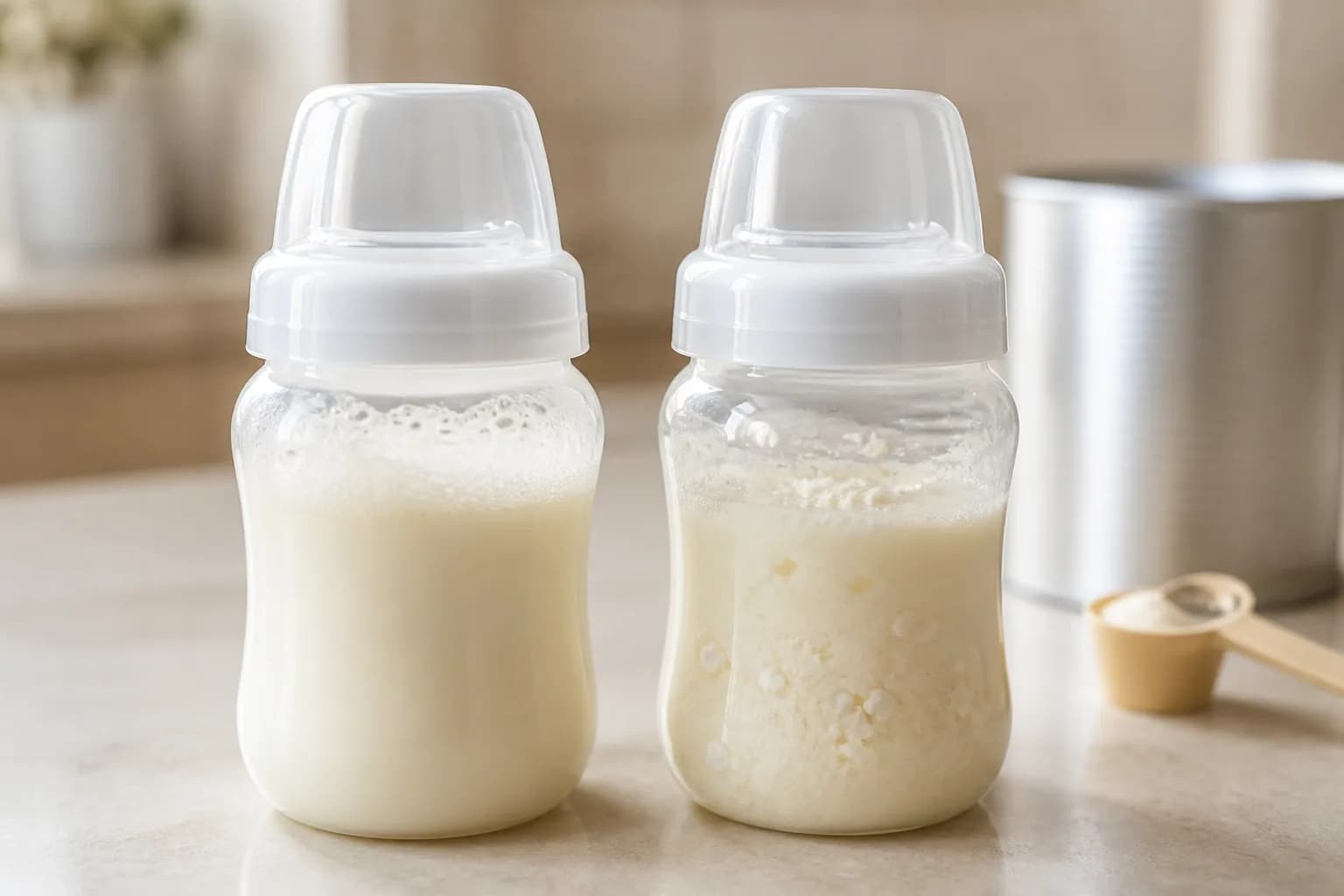
A layer of foam after shaking Kendamil is usually expected. Large persistent powder clumps are a separate problem. Foam is air incorporated during mixing; clumps can come from water temperature, measurement, mixing order, damp powder, or the wrong scoop.
Do not change the water-to-powder ratio to make the bottle look smoother. Correct dilution matters more than appearance.
Foam vs clumps vs spoiled formula
Common Kendamil bottle textures
Swipe across the table to see every column.
| What you see | Common explanation | What to check |
|---|---|---|
| Fine bubbles or foam on top after shaking | Air incorporated during normal mixing | Let it settle briefly within the safe feeding window |
| A few tiny particles that disappear with continued shaking | Powder still hydrating | Current water instructions, cap security, correct ratio |
| Large dry islands or powder stuck to the bottom | Water too cool, powder added first, heaped scoops, or incomplete mixing | Prepare again exactly as the current can directs |
| Hard clumps inside the dry powder can | Moisture or humid storage | Wet scoop, refrigerator storage, lid, unusual odor or color |
| Unexpected smell, color, pests, damaged seal, or wet powder | Possible contamination or product damage | Do not use; keep the lot code and contact the manufacturer |
Why Kendamil gets frothy
Kendamil's official foam explanation says frothiness is associated with its whole-milk recipe and the way the formula is made without certain foam inhibitors. Shaking also traps air in any liquid.
Foam itself does not mean:
- the formula is expired;
- the bottle has the wrong calorie concentration;
- the baby will automatically become gassy;
- the nipple needs to be enlarged; or
- the bottle must be discarded.
Cap the bottle securely and shake as the can directs. If the powder is dissolved, you can let fine bubbles settle briefly—but keep the original preparation clock. FDA guidance says use prepared formula within two hours, and the current U.S. Kendamil directions say use it within one hour after feeding begins.
Why Kendamil can clump
The water did not match the current U.S. directions
Kendamil changed its U.S. instructions in 2026. Current pages say to boil fresh water, cool it for five minutes, measure the water, and immediately add powder. Older labels and other countries can say something different.
Powder added to cold or insufficiently warm water may hydrate differently. Do not improvise hotter or cooler water; use the exact can.
Powder went into the bottle first
Water should be measured first. Powder-first preparation makes the dilution harder to control and can create a dense layer at the bottom.
The scoop was heaped, packed, or wrong
Current U.S. Kendamil pages state one level scoop from the matching can per 1 fluid ounce of water. A heaped scoop, a scoop from another formula, or an estimated partial scoop changes both concentration and mixing behavior.
The powder absorbed moisture
Kendamil says to store powder in a cool, dry place and not in the refrigerator because humidity can cause clumping. A damp scoop can do the same thing.
Soft powder that breaks apart is not automatically unsafe, but hard or unexpected clumps inside the can are a reason to inspect storage, odor, color, seal, lot, and opening date. When water or a wet object entered the can, do not guess about safety.
The bottle was not mixed completely
Attach the nipple and cap as instructed and shake well. Check the bottom and shoulder of the bottle for dry pockets before feeding.
Do not poke clumps through the nipple hole, cut the nipple, strain the formula through an unapproved material, or add extra water.
A clean troubleshooting sequence
- Verify the product, use-by date, seal, lot, and opening date.
- Confirm the powder was stored tightly closed, cool, and dry—not in the refrigerator.
- Wash hands and use clean feeding equipment.
- Follow the current can's water and cooling instructions.
- Measure water first.
- Add level scoops using only that can's scoop.
- Cap and shake well.
- Inspect for dry pockets, then cool and test the bottle as directed.
- Keep the preparation and feeding-start times.
If a correctly prepared bottle repeatedly has large clumps, photograph the can, lot code, powder, and prepared bottle and contact Kendamil. Do not keep changing the ratio.
Did the 2026 Kendamil update change appearance or mixing?
Kendamil says the updated permanent U.S. recipes and labels may produce small differences in powder color, prepared color, smell, taste, or mixing. The company describes the new powder and bottle as potentially slightly more golden.
That makes the exact can important. A mild expected color change is different from moisture, an off odor, damaged packaging, or a product safety notice.
See the manufacturer's 2026 U.S. formula update for the current transition information.
Does foam cause gas?
Air in a bottle and feeding technique can affect how much air a baby swallows, but visible foam is not a diagnosis. Keep the nipple filled with milk, use a flow the baby can coordinate, and allow pauses and burps.
If feeds include repeated coughing, choking, leaking, pulling away, or frustration, use the bottle nipple flow guide and discuss recurring problems with the pediatrician or feeding specialist.
When to throw it away
Discard the formula or stop using the can when:
- a wet scoop or water entered the powder;
- the can was stored in uncontrolled heat, cold, or humidity;
- the powder has pests, mold, unexpected color, or an unusual odor;
- the seal or container is damaged;
- the use-by or opened-can period has passed;
- the mixed bottle is outside the safe time window; or
- an official notice includes the lot.
Bottom line
Fine foam is a normal result of shaking Kendamil and can settle briefly while the bottle remains within its safe time window. Persistent clumps call for a methodical check: current water directions, water first, level matching scoops, thorough shaking, and dry powder storage. Never “fix” texture by changing dilution.
Sources checked August 2026: CDC formula preparation and storage guidance, FDA infant formula guidance for parents and caregivers, and Kendamil’s manufacturer explanation of formula foam. Texture never overrides the exact can’s mixing ratio or discard times.