
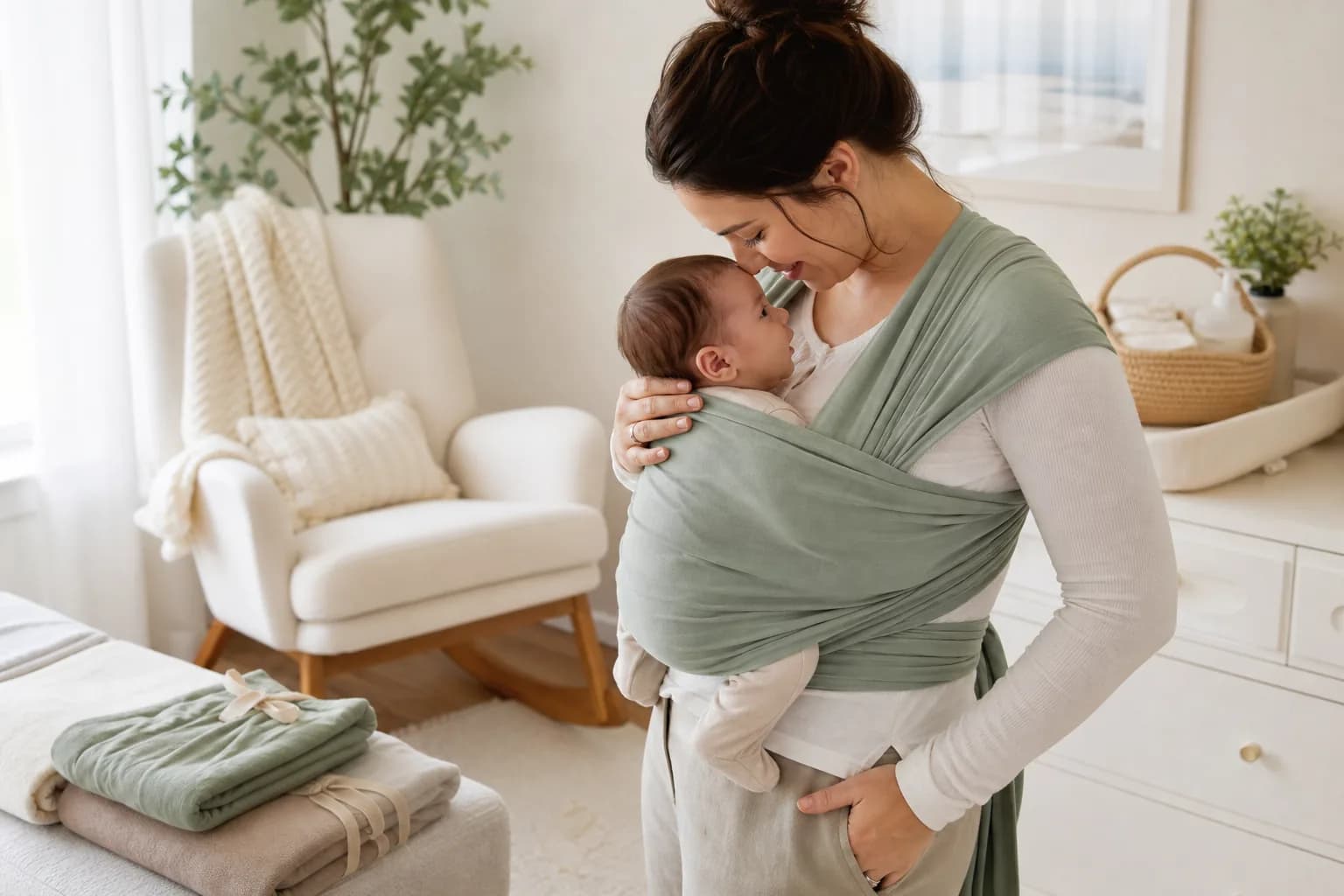
If you are shopping for a baby carrier wrap, you are probably in one of two moods: sweet dreamy newborn nesting, or "please tell me how to hold this baby and still make toast."
Both are valid.
A wrap can be one of the best newborn purchases because it keeps baby close, supports contact naps, and gives you your hands back. But wraps are also the baby gear category where a lot of parents buy the prettiest one, try it once while sleep-deprived, and then shove it in a basket forever.
So here is the practical version: what kind of baby carrier wrap to buy first, what matters for newborn safety, and when you may want a structured carrier instead.
Quick Answer: Best Baby Carrier Wrap for Most Newborns
For most newborns, start with a soft stretchy wrap. It is cozy, forgiving, and easier for contact naps than a stiff carrier. Look for soft, breathable fabric, enough stretch to feel snug without sagging, and instructions that do not make you want to cry.
If you already know you hate tying fabric, skip the wrap and start with a soft structured newborn carrier instead. My full baby carrier guide compares those options.
Baby Carrier Wrap vs Structured Carrier
A baby carrier wrap is usually one long piece of fabric you tie around your body. A structured carrier uses buckles, straps, and a built-in seat.
Wraps are usually best for newborn snuggles, contact naps, around-the-house wearing, and babies who like feeling tucked in.
Structured carriers are usually best for longer walks, faster on-and-off, bigger babies, shared use between parents, and anyone who does not want to learn wrapping.
You do not need both on day one, but a lot of families eventually like having both: a wrap for the newborn stage and a structured carrier for errands, travel, and toddler use.
What to Look for in a Baby Carrier Wrap
Snug but not tight
A good newborn wrap should hold baby high on your chest without letting them slump down. If the wrap gets loose after ten minutes, you will spend the whole time re-adjusting it.
Breathable fabric
Newborns are tiny heaters. If you run warm or live somewhere hot, prioritize lightweight cotton, modal, bamboo blends, or other breathable fabrics.
Easy washing
Spit-up, milk, diaper leaks, and mystery newborn fluids are part of the job. Machine-washable matters.
Simple instructions
The best wrap is the one you will actually use. If the tying instructions make you want to cry, pick a wrap with clearer tutorials or choose a buckle carrier.
Newborn-friendly positioning
Baby should be upright, close enough to kiss, with their face visible and chin off their chest. Their knees should sit higher than their bottom in a supported M shape.
Best Baby Carrier Wrap Categories to Shop
I would not overthink this. Instead of chasing one perfect brand, pick the style that matches your life.
Best First Wrap for Most Newborns: Soft Stretchy Wrap
A stretchy wrap is the easiest starting point for most parents. It molds around your body, feels cozy for newborns, and works well for contact naps.
Shop options: stretchy baby carrier wraps
Best for: newborn stage, home use, naps, smaller babies.
Skip it if: you want something fast for parking lots or a heavier baby.
Best Budget Pick: Simple Cotton Wrap
If you are not sure whether babywearing will stick, a simple cotton wrap is a reasonable first buy. You do not need the fanciest fabric to learn whether your baby likes being worn.
Shop options: cotton baby wrap carriers
Best for Hot Weather: Lightweight Wrap
If you are having a summer baby or you live somewhere warm, breathable fabric is everything. Look for lighter materials and avoid bulky layers when possible.
Shop options: lightweight baby wrap carriers
Best Wrap Alternative: Ring Sling
A ring sling is not exactly the same as a wrap, but it scratches a similar itch. It is soft, compact, and great for quick ups once you learn the adjustment.
Shop options: ring sling baby carriers
Best for Wrap Haters: Newborn Structured Carrier
Some people take one look at a long wrap and simply know. If that is you, go straight to a newborn-ready buckle carrier.
Shop options: newborn baby carriers
For more on buckle carriers, read my full Baby Bjorn and baby carrier guide.
Baby Carrier Wrap Safety Basics
When wearing a newborn, check that baby's face is visible, their chin is not tucked to their chest, they are high enough to kiss, the fabric supports baby's back and bottom, their knees are higher than their bottom, and the wrap is snug enough that baby does not slump.
Do not wear a baby while driving, sleeping, cooking over heat, or doing anything where you could fall or spill something hot.
If baby was premature, has breathing concerns, or has medical issues, ask your pediatrician before babywearing.
The Biggest Baby Wrap Mistakes
Buying only for the photo
Pretty fabric is fun. But if it is too hot, too slippery, or too hard to tie, it will not help you on a Tuesday when the baby is yelling.
Wearing baby too low
If you have to bend your neck way down to kiss baby's head, the wrap is probably too low or too loose.
Letting fabric cover baby's face
Newborn airways are tiny. Keep baby's nose and mouth visible.
Expecting one wrap to last forever
A stretchy newborn wrap may not feel supportive once baby gets heavier. That does not make it a bad purchase. It just means it did its newborn-stage job.
What I Would Buy First
If I were building a tiny newborn setup from scratch, I would buy one soft stretchy wrap for the first few months, one set of burp cloths because the wrap will get spit-up on it, and one structured carrier later if I ended up wearing baby a lot outside the house.
You can absolutely start small. The newborn stage is not the time to buy every carrier on the internet.
If you're also considering a seat for supervised awake time, here's our BabyBjörn bouncer review.
Related Posts
- Baby Carrier Guide 2026: Baby Bjorn, Safety Tips & Alternatives
- Baby Laundry Detergent Guide
- Our First Three Months With a Newborn